
Post Inflammatory Erythema: Why Red Marks Stay After Acne Clears

Hello — I'm Dr. Min Jeong, founding director of REDI Dermatology in Seoul.
A lot of people arrive in my consultation room believing their acne has scarred them, and a good proportion of them are wrong — in a way that is genuinely good news. What they are looking at is post inflammatory erythema, and it behaves nothing like a scar. This is the explanation I give in the room, including the part about why it is taking so much longer to fade than they expected.
What post inflammatory erythema actually is
When a spot becomes inflamed, the small blood vessels beneath it widen to deliver the cells that resolve the inflammation. That is the immune system working correctly.
Once the spot has healed, those vessels do not always return to their previous calibre straight away. They stay slightly dilated, and because they sit close to the surface, the area still reads pink or red. The acne is finished; the plumbing has not caught up.
Post inflammatory erythema is therefore a vascular mark, not a structural one. Nothing has been lost from the skin. That distinction determines everything about how it is treated.
How to tell it apart from a scar or a brown mark
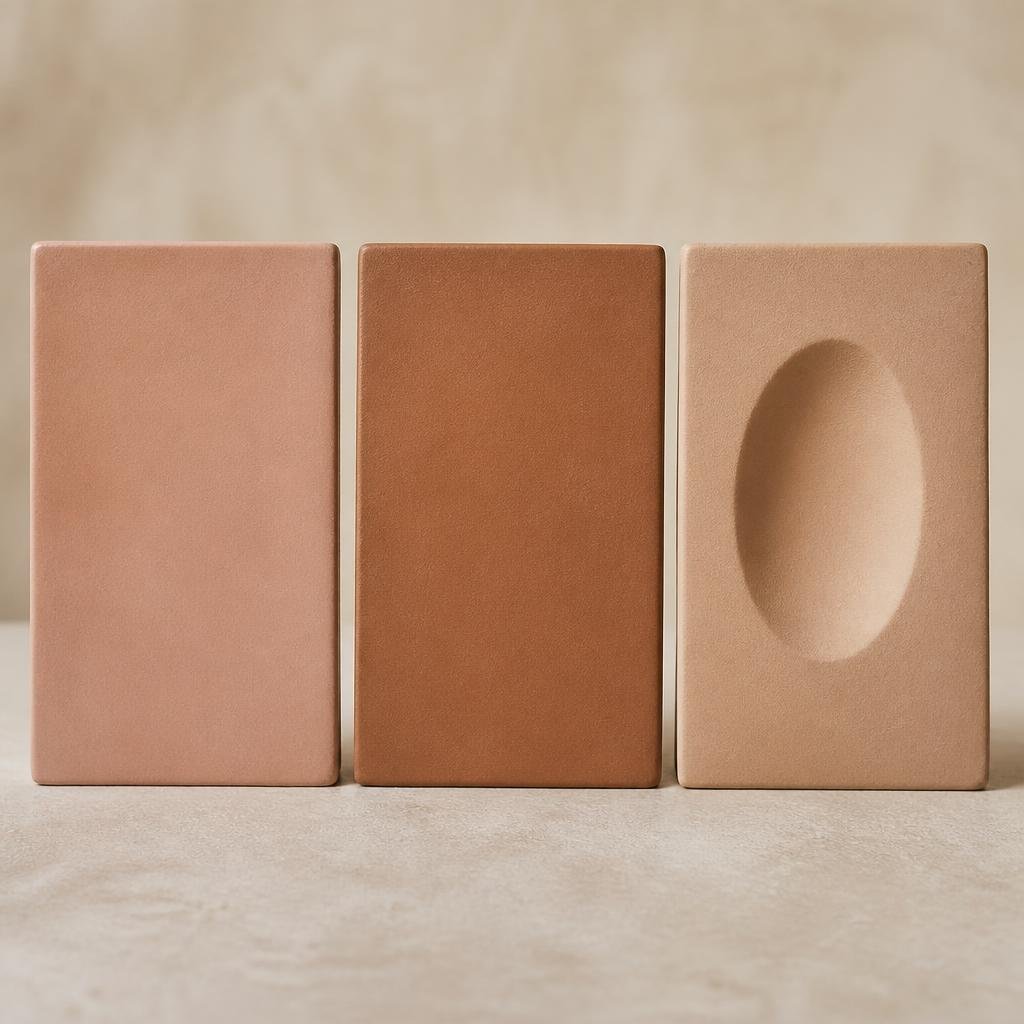
There are three things acne commonly leaves behind, and they are frequently confused.
Flat and red is post inflammatory erythema — dilated vessels. Press the skin gently or stretch it, and the colour fades while the pressure holds.
Flat and brown is post inflammatory hyperpigmentation — extra pigment rather than extra blood flow. It does not blanch under pressure, and it responds to entirely different treatment.
Indented or raised is a true scar — the skin's structure has changed. You can feel it with a fingertip, and no amount of colour correction will level it.
Many patients have two of these at once, which is part of why the marks seem so stubborn. Treating the wrong one produces no result and a great deal of frustration.
Why it lasts longer than people expect
The honest answer is that vessels settle on their own schedule, and it is a slow one. Months, not weeks.
Two things extend it. The first is recurrence: a new spot in the same area restarts the process before the previous mark has resolved. This is why I usually want active acne under control before we spend much effort on the redness. The second is barrier damage — often from aggressive home treatment. Skin that is being scrubbed, acid-treated and picked at is skin whose vessels are being asked to settle in an environment that keeps provoking them.
How I approach it at REDI
Because the mark is vascular, the most direct route is to treat the vessels themselves. Vbeam Perfecta is a pulsed dye laser, which is absorbed preferentially by the blood within those dilated vessels — it addresses the cause of the colour rather than the colour itself.
Where the skin is also reactive and the barrier is struggling, I often support the recovery environment alongside it. Rejuran Healer works on that side of the problem, which matters when post inflammatory erythema is sitting on skin that has been over-treated at home for months.
Where there is texture change as well as colour, Potenza can address both, since the same session can reach the deeper tissue. Whether that is appropriate depends on how reactive the skin currently is.
I examine which of these applies before recommending anything. The same red mark on two different faces can warrant two different plans.
What to realistically expect
Redness usually softens progressively rather than disappearing in one step. Most people see the change in photographs before they see it in the mirror, because the shift is gradual and the face is too familiar.
I ask patients to photograph in consistent light — same window, same time of day — several weeks apart. That is a far more reliable record than memory. Results vary by individual, and skin that is still breaking out will improve more slowly than skin that has settled.
Downtime, sessions and planning a trip
Vascular treatment usually leaves flushing for some hours, occasionally longer. It is not typically a treatment that takes you out of circulation, but it is also not invisible on the day.
Session numbers depend on how widespread and how established the redness is. I would rather give you a realistic range after examining the skin than a confident number in an article about someone else's face.
If you are visiting Korea, the sequencing matters. Tell us your flight dates first — I would rather choose a plan that fits the trip than one that has you boarding a flight mid-recovery. Our interpreters are present for the consultation and the treatment, so you can follow the reasoning rather than the gestures.
How I think about cost
I do not publish prices for this, because the honest figure depends on the area involved and the number of sessions your skin actually needs. What I will commit to is that the full plan is explained before anything begins, and that we will not add to it mid-course without telling you why.
Takeaways
Post inflammatory erythema is a flat red mark left by dilated vessels after acne has healed, and it is not a scar. It blanches under pressure, it fades slowly on its own, and it fades faster when the vessels are treated directly and the barrier is allowed to recover.
Settling active acne first usually saves time rather than costing it. And judge progress in photographs, not in the mirror.
Frequently asked
What is post inflammatory erythema?
It is the flat pink or red mark left behind after an inflamed spot has healed. The spot is gone, but the small blood vessels that widened during the inflammation have not yet settled, so the area still reads red.
How is post inflammatory erythema different from a scar?
A scar is a change in the skin's structure — a depression or a raised area you can feel. Post inflammatory erythema is flat. If you stretch the skin and the colour fades, you are usually looking at vascular redness rather than a scar.
Does post inflammatory erythema go away on its own?
Often it does, but slowly — months rather than weeks, and longer on fair skin where the contrast is greater. Repeated new breakouts in the same area restart the clock, which is why I usually settle the active acne before working on the marks.
What treatments help post inflammatory erythema?
Treatments that target the dilated vessels directly are the mainstay, supported by anything that helps the barrier recover. I choose between them based on how widespread the redness is and how reactive the skin has become. Results vary by individual.
Can I treat it while I still have active acne?
Sometimes, but not always in the same session. Working on redness while inflammation is still active can mean treating marks that are about to be replaced by new ones. I would rather sequence it properly than repeat it.
Keep reading
More on this from Dr. Min Jeong.




Dr. Min Jeong
Founding director, REDI Dermatology · Seoul
“A treatment isn't shopping. I'd rather diagnose first and recommend only what your skin genuinely needs — the same way I'd advise my own family.”
Board-certified dermatologist — trained at Kangbuk Samsung Hospital, and former Chief of Dermatology at the ROK Ministry of National Defense.
Juvelook Key Opinion Leader — 15,000+ vials administered, Korea's highest-volume clinic (Apr 2025). Key Opinion Leader titles are granted by device companies and carry no legal standing.
A regular speaker on clinical dermatology at Korean medical symposiums, including Juvelook clinical-experience panels.
Why international patients choose REDI
Interpreters in the room
English and Chinese, on site for your consultation and treatment.
Board-certified doctors only
Every procedure by a dermatology specialist — never unsupervised staff.
15,000+ Juvelook vials — No.1 in Korea
Hands-on volume most clinics have not reached.
Airport pickup arranged
So your first day in Seoul isn't spent lost with luggage.
Aftercare once you're home
Online follow-up, so a question next week still reaches your doctor.
Explore the treatment
Vbeam Perfecta
A device that uses 595 nm — the ideal wavelength for vascular treatment — to address a range of vascular conditions. It effectively treats acne, acne marks, facial redness, and scars.
Rejuran Healer & Rejuran HB Plus
Rejuran Healer, a tissue-regenerating substance derived from salmon, is injected to effectively renew damaged skin. If you're sensitive to pain, Rejuran HB Plus — which contains lidocaine — offers a more comfortable treatment.
Potenza
By delivering heat energy into the dermis with microneedle radiofrequency, it reduces inflammatory substances in the skin and eases the burning sensation.
Visit REDI Dermatology
4F & 5F, DM Tower Bldg. 2, 105 Bangbae-ro, Seocho-gu, Seoul, Korea
길찾기 (Get directions)Medically reviewed by Dr. Min Jeong · Last updated September 23, 2026
This article is general information, not medical advice. Results vary by individual. These are elective, non-insured aesthetic treatments. Please consult a board-certified doctor about your own case.
Ask what your skin actually needs
Free online consultation