
Red Mole on Skin: What That Small Red Dot Usually Is

Hello — I'm Dr. Min Jeong, founding director of REDI Dermatology in Seoul.
Someone notices a small bright red dot on their chest or arm that was not there last year, searches for "red mole", and finds a mixture of reassurance and alarm in roughly equal measure. It is a reasonable thing to want a straight answer about. Here is the one I give in my consultation room, including the part about when it genuinely is worth having examined.
A red mole is usually not a mole
The name is misleading. A mole in the dermatological sense is a cluster of pigment-producing cells. What most people are calling a red mole contains no pigment at all.
It is almost always a cherry angioma: a small, benign collection of widened capillaries sitting close to the surface. The colour comes from blood, not melanin. That is why it looks so saturated — a bright red that pigment cannot produce.
They are typically a couple of millimetres across, slightly raised, smooth, and most common on the trunk. They tend to arrive quietly in one's thirties and forties and accumulate slowly after that.
How to tell it from something that needs checking
I want to be careful here, because this is the part that matters more than the treatment.
A typical cherry angioma is small, evenly coloured, regular in outline, and stable over time. It may bleed if you catch it with a fingernail or a razor, which is unremarkable.
What I would want to look at in person is anything that bleeds without being knocked, changes shape or colour, grows noticeably over weeks, has an irregular or blurred border, or sits somewhere it is repeatedly irritated. None of those automatically mean something serious. They mean the question deserves an examination rather than a search engine.
If you are reading this because something changed recently, that is the paragraph to act on.
Why they appear
The honest answer is that we do not fully know. Age is the clearest factor, and there is a familial tendency — patients often tell me their parent had them too.
They are not caused by diet, not caused by sun exposure in the way that pigmented lesions are, and not a sign that something is wrong internally. A sudden crop of many new ones over a short period is worth mentioning to a doctor, mostly so it can be ruled out as coincidence.
How I approach a red mole at REDI
Because the lesion is made of blood vessels, the logical target is the blood inside them. Vbeam Perfecta is a pulsed dye laser whose energy is absorbed preferentially by that blood, which is why vascular lesions respond to it when pigment-targeting treatments do nothing.
What I choose depends on size and depth. A very small, superficial lesion and a larger, deeper one are not the same problem even though they look similar to the patient. Where the surrounding skin is also flushed or reactive, I may address that separately — Potenza reaches deeper tissue, and general facial redness is a different conversation from a discrete red mole.
I examine before I recommend. That is not a formality here; confirming what the lesion is comes before deciding how to treat it.
What to expect afterwards
Treated vascular lesions commonly darken before they clear — a purplish or greyish stage that can look worse than the original for a few days. I mention this in advance because patients who are not told find it alarming, and patients who are told find it unremarkable.
After that, the area usually settles over a couple of weeks. Some lesions clear in a single session; others need more than one, particularly if they are deeper than they appear. Results vary by individual.
Planning around a trip
If you are visiting Korea and want this looked at, factor in that short darkening phase. It is not painful and it is not a reason to stay indoors, but it is visible, so I would rather you knew before the flight home than discovered it afterwards.
Tell us your travel dates at the consultation. English- and Chinese-speaking interpreters are on site, so you can ask the questions you would ask in your own language — which for a lesion you are worried about is the whole point.
How I think about cost
I do not quote a figure here, because it depends on the number of lesions, their size and how many sessions they need. You will hear the plan and what it involves before anything starts.
Takeaways
A red mole is usually a cherry angioma — benign, made of blood vessels rather than pigment, and more common with age. Treatments that target vessels are the sensible route, and a temporary darkening phase afterwards is expected rather than a problem.
The one thing worth taking seriously: if a red mole is changing, bleeding unprompted or growing, have it examined. Confirming it is harmless takes minutes.
Frequently asked
What is a red mole?
Most of the time it is a cherry angioma — a small, benign cluster of widened blood vessels sitting just under the surface. It is not a mole in the usual sense, because it contains no pigment cells at all.
Are red moles dangerous?
Cherry angiomas are benign. What matters is confirming that is what you have. A lesion that bleeds without being knocked, changes shape, grows quickly or has an irregular border should be examined rather than assumed.
Why am I suddenly getting more of them?
They become more common with age and often appear in groups on the trunk. Suddenly developing a large number in a short period is worth mentioning to a doctor, not because it is usually serious, but because it is worth confirming.
Can a red mole be removed?
Yes, and because it is made of blood vessels, treatments that target vessels are the usual approach. What suits you depends on the size, the depth and where on the body it sits. I would examine it before recommending anything.
Will it come back after treatment?
A treated lesion generally does not return, but the tendency to form new ones elsewhere remains. Patients who had several tend to develop more over the years. Results vary by individual.
Keep reading
More on this from Dr. Min Jeong.



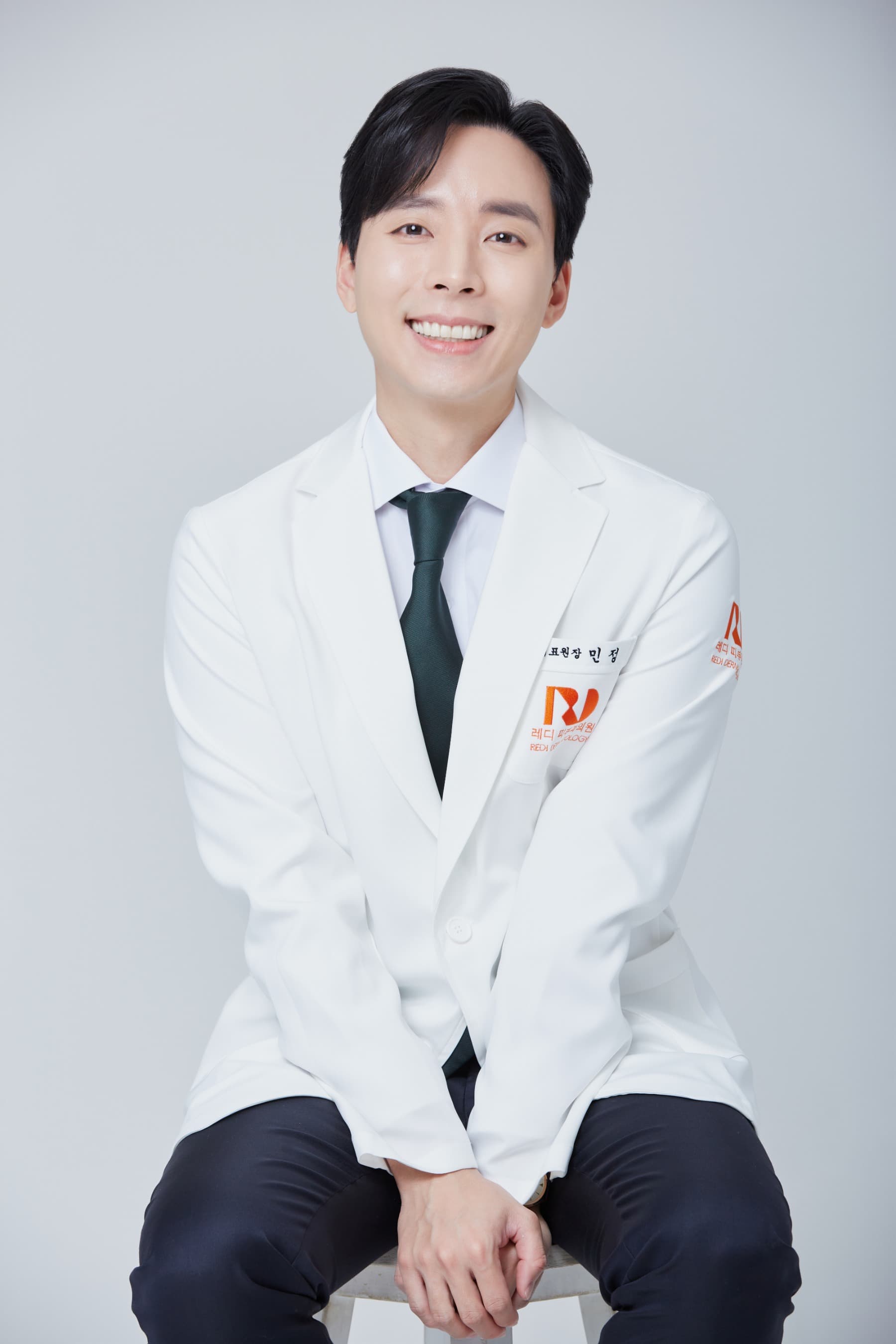
Dr. Min Jeong
Founding director, REDI Dermatology · Seoul
“A treatment isn't shopping. I'd rather diagnose first and recommend only what your skin genuinely needs — the same way I'd advise my own family.”
Board-certified dermatologist — trained at Kangbuk Samsung Hospital, and former Chief of Dermatology at the ROK Ministry of National Defense.
Juvelook Key Opinion Leader — 15,000+ vials administered, Korea's highest-volume clinic (Apr 2025). Key Opinion Leader titles are granted by device companies and carry no legal standing.
A regular speaker on clinical dermatology at Korean medical symposiums, including Juvelook clinical-experience panels.
Why international patients choose REDI
Interpreters in the room
English and Chinese, on site for your consultation and treatment.
Board-certified doctors only
Every procedure by a dermatology specialist — never unsupervised staff.
15,000+ Juvelook vials — No.1 in Korea
Hands-on volume most clinics have not reached.
Airport pickup arranged
So your first day in Seoul isn't spent lost with luggage.
Aftercare once you're home
Online follow-up, so a question next week still reaches your doctor.
Explore the treatment
Vbeam Perfecta
A device that uses 595 nm — the ideal wavelength for vascular treatment — to address a range of vascular conditions. It effectively treats acne, acne marks, facial redness, and scars.
Potenza
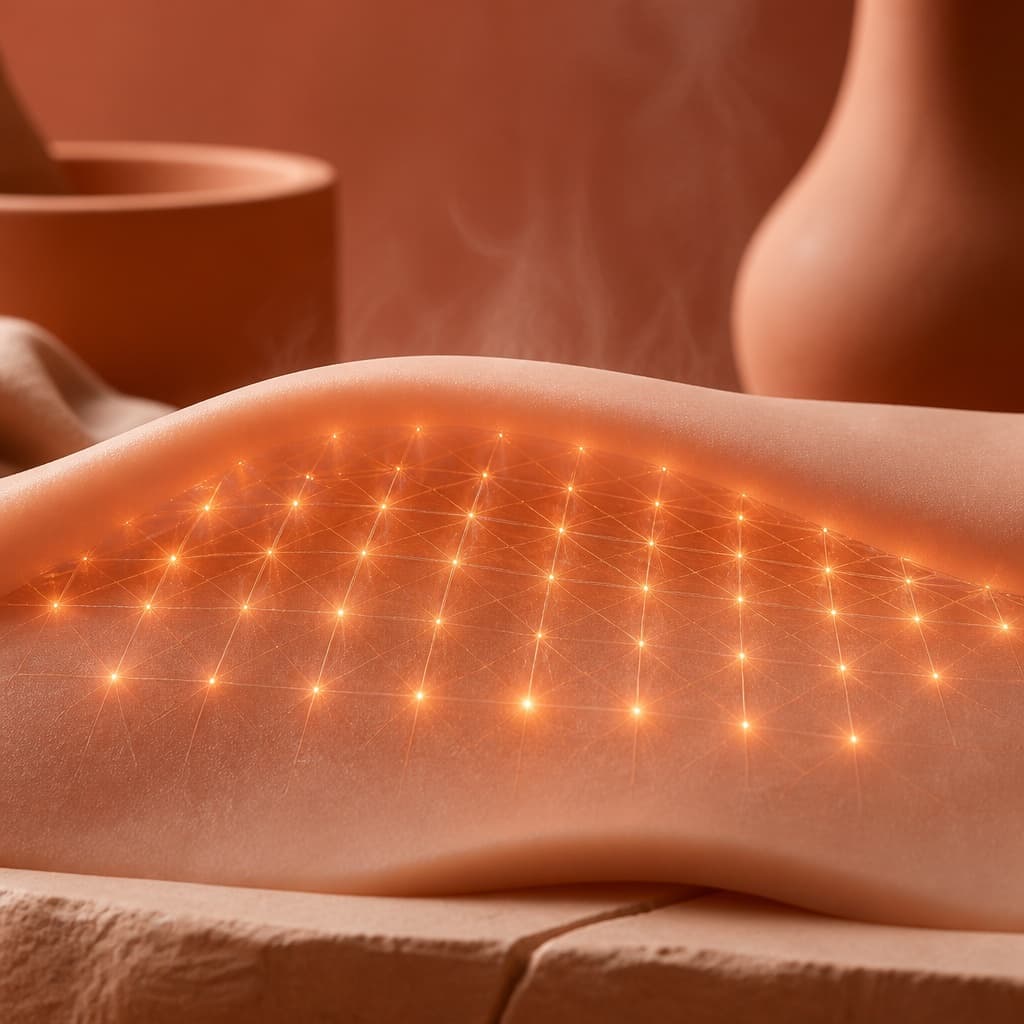
By delivering heat energy into the dermis with microneedle radiofrequency, it reduces inflammatory substances in the skin and eases the burning sensation.
Rejuran Healer & Rejuran HB Plus
Rejuran Healer, a tissue-regenerating substance derived from salmon, is injected to effectively renew damaged skin. If you're sensitive to pain, Rejuran HB Plus — which contains lidocaine — offers a more comfortable treatment.
Visit REDI Dermatology
4F & 5F, DM Tower Bldg. 2, 105 Bangbae-ro, Seocho-gu, Seoul, Korea
길찾기 (Get directions)Medically reviewed by Dr. Min Jeong · Last updated September 23, 2026
This article is general information, not medical advice. Results vary by individual. These are elective, non-insured aesthetic treatments. Please consult a board-certified doctor about your own case.
Ask what your skin actually needs
Free online consultation