
What should I ask to find the best skin clinic in seoul for foreigners?
That last point is the one visitors underestimate when they search for the best skin clinic in seoul for foreigners: a long weekend leaves no slack if your face is still swollen on the morning you fly home.
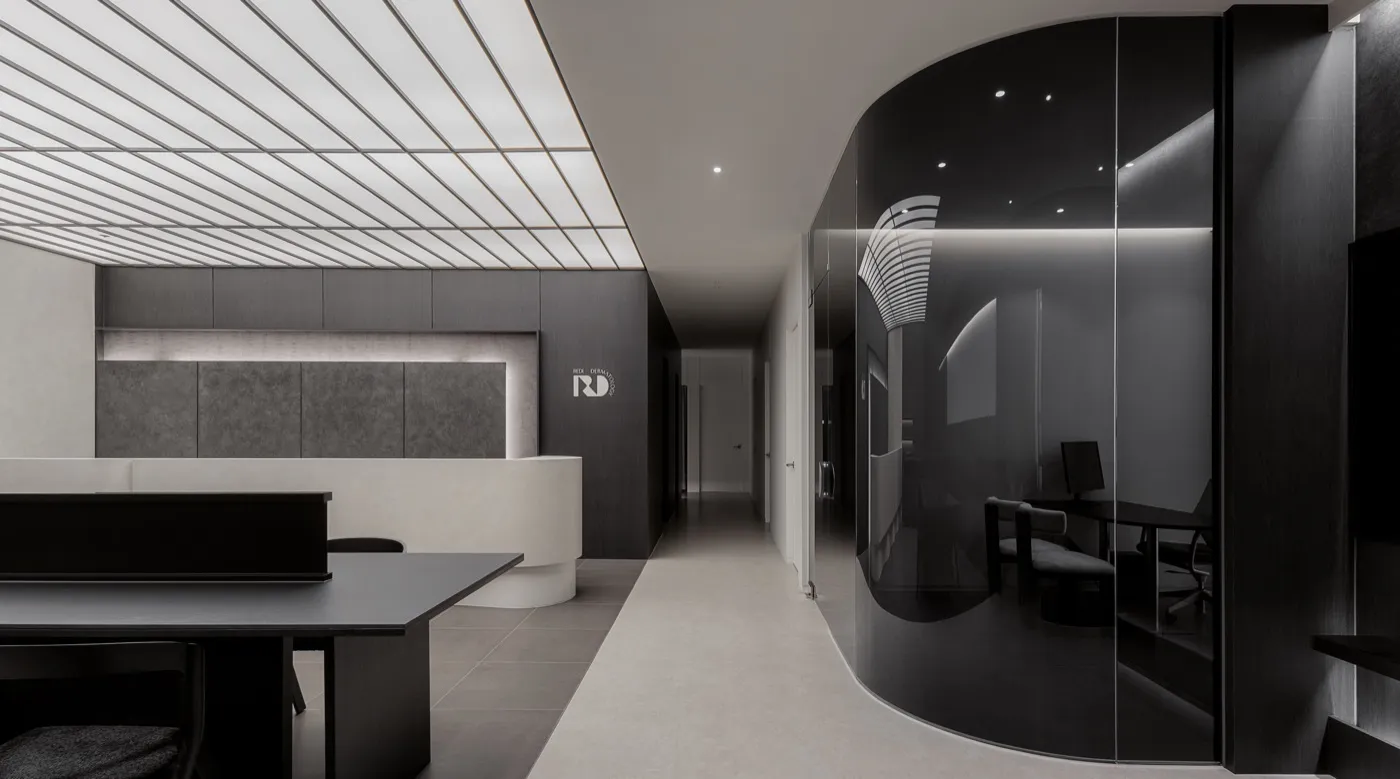
At REDI Dermatology in Bangbae, Seoul, English and Chinese interpreters are on site for both the consultation and the treatment, so every question below can be asked and answered in a language you follow.
"How do I find the best skin clinic in seoul for foreigners?" is one of the questions patients abroad send most often, so here are the questions I'd want a friend to ask any clinic in Seoul, mine included, and what each answer tells you. Please read to the end; the last question is the one people forget.
I'm Dr. Min Jeong, founding director of REDI and a board-certified dermatologist.
If you already know acne is what you want treated, send two things on WhatsApp: a daylight photo of the area without makeup, and the dates you'll be in Seoul.
Three questions to send before you book
Ask who will examine you, when the clinic is open on your dates, and who will translate. These three answers decide whether a short trip can work at all, and you can get them by message before buying a ticket.
Who examines my skin, and what is their specialty? A clear answer gives a name and a specialty you can look up. Mine: Board-Certified Dermatologist, Kangbuk Samsung Hospital; Former Chief of Dermatology, Medical Office of the ROK Ministry of National Defense; Full member, Korean Dermatological Association. If the reply only says "our specialists", ask again for a name.
What are your hours on the days I'm in town? For a visitor this matters more than it sounds. REDI is open Mon/Wed/Fri 10:00–20:00, Tue/Thu 10:00–19:00 and Sat 10:00–15:00, with lunch from 13:00 to 14:00 on weekdays.
The clinic is a 2-minute walk from Bangbae Station Exit 3 on Line 2 and a 5-minute walk from Naebang Station Exit 3 on Line 7, so an early-evening slot after a day of sightseeing is realistic on three weekdays.
Will an interpreter be in the room? Ask about the consultation and the treatment separately, since those are the two moments where a misunderstanding costs you. At REDI, English and Chinese interpreters are on site for both. For a fuller picture of the day itself, see what to expect at an English-speaking skin clinic in Korea.
What should you ask once you're in the consultation chair?
Four questions do most of the work: what kind of acne you have, why this treatment fits it, how many sessions it usually takes, and what your face will look like on the day you fly. Listen for reasons tied to your own skin.
"What kind of acne is this, and what is driving it?"
A useful answer sorts what's on your face. Inflamed bumps that return to the same spot, oily skin with constant new breakouts, nose blackheads, flat red marks, flat brown marks and indented scars are six different problems, and each points toward a different tool. If the answer lumps them together as "acne", the plan that follows will probably be generic too.
Doctor's note
The colour of the marks tells me as much as the breakouts do. A red mark that fades when pressed is still mostly a blood-vessel problem, a brown one is pigment, and a dip in the skin is a scar, and those three call for different devices. Where breakouts keep returning matters as well, because a spot that flares in the same place every month behaves differently from scattered acne. Acne marks clear up most completely when they're treated early, alongside the acne itself, so I'd rather plan both together than chase the marks later.
"Why this treatment for my skin?"
A good answer connects the device to the problem it was chosen for. Here is how the acne options on REDI's menu line up, with a follow-up question worth asking about each.
| Treatment | What it's used for | A fair follow-up question |
|---|---|---|
| Agnes | Acne that returns to the same spot, milia-type bumps, nose blackheads | "Which spots would you treat, and which would you leave?" |
| Gold PTT | Recurring inflammatory acne and excess sebum | "How will we know whether it's working?" |
| Potenza | Acne and pores, using RF heat delivered through microneedles | "Is this aimed at active acne, marks, or both?" |
| Vbeam Perfecta | Acne, acne marks, facial redness and scars, at 595 nm | "Are my marks red enough for this to help?" |
If the reason given sounds the same for every face, ask what in your skin made them choose it.
"How many sessions does this take, and what happens in between?"
Acne treatment rarely finishes in one appointment. A fair answer names how many sessions are usually planned, the gap between them, and what you do at home in the meantime, including which of your current products to pause. For a traveler, also ask which parts of the plan need you physically in Seoul and which can be handled with home care.
"What will my face look like on the day I fly?"
This is the question that turns a treatment plan into a trip plan. The answer should be a description (pink, a little swollen, flaking) and a number of days, and it gets its own section below.
Which answers should make you slow down?
Four kinds of reply deserve a follow-up question before you agree to anything. None of them is automatically a reason to walk out; each is a reason to ask one more thing.
- A full package before anyone has examined you. A plan written from a booking form can't account for the type of acne you have.
- No mention of downtime for a device that uses needles or heat. Ask what the skin looks like the next morning.
- Promises of a fixed result. Acne is a condition that can return, and a careful answer says so and explains what keeps it under control.
- Pressure to decide on the day. You can take the plan back to your hotel, think it over, and reply the next morning.
Whoever you end up calling the best skin clinic in seoul for foreigners, these replies tell you more about it than any ranking list can. A longer list of what to check on a clinic's site is in this dermatologist's checklist for choosing a skin clinic in Seoul.
What risks and side effects should you ask about before acne treatment?
The common ones are redness, swelling and a few days of sensitivity, and they're usually temporary. Ask the doctor which of these your treatment carries and for how long, then plan your trip around the answer.
The risk I'd want every visitor with medium or darker skin to ask about is darkening. According to the American Academy of Dermatology, people with darker skin tones are more prone to post-inflammatory hyperpigmentation, the dark spots that can follow inflamed acne, and to thickened scars.
The same guidance warns that picking or squeezing acne can lead to scarring. So ask directly how the plan lowers that risk for your skin, and what aftercare matters most in the first week.
Less often, heat- and needle-based treatments can cause a flare of breakouts, small crusts, or irritation that lasts longer than expected. Tell the doctor about any oral acne medication, a recent sunburn, pregnancy, or a history of cold sores, since some energy treatments are usually postponed in those situations. Whether a treatment suits you is decided at the in-person exam, and Results vary by individual.
If your skin tends to darken after breakouts, say so in your first WhatsApp message and add a daylight photo of a few older marks.
How many days should a short trip leave around treatment?
Treat early in the trip and keep the last day for nothing at all. For a three- or four-night visit, that usually means consultation and treatment on day one or two, then sightseeing with sunscreen and a hat while the skin settles.
For Agnes, REDI lists downtime as one to three days, with possible redness or swelling. That's the treatment where the buffer before your flight matters most, because swelling is easier to plan around than to hide.
On a Friday arrival, the weekday evening hours help: a late slot means you can land, check in, and still make a consultation the same day. Saturdays run 10:00 to 15:00, which suits a follow-up look before a Sunday departure. Skip the sauna, the jjimjilbang and long hot showers for the first few days, and keep drinking light, since heat and alcohol both make redness linger.
For Gold PTT, REDI lists the downtime as minimal, one to two days. Cabin air is dry, so carry the moisturizer the doctor recommends in your hand luggage and reapply on the plane.
Who can you contact once you've flown home?
Ask this before treatment, not after. You want three things clear: who to contact if something looks wrong, which changes are normal in the first week, and which ones mean you should see a doctor at home. At REDI, the clinic number is 02-522-6227, and we're open Mon/Wed/Fri 10:00-20:00, Tue/Thu 10:00-19:00 and Sat 10:00-15:00, closed for lunch 13:00-14:00 on weekdays.
Before you leave the clinic, note the name of each treatment and the date, and take a few photos of your skin in daylight on day one, three and seven.
If acne or dark spots aren't improving after you're home, the American Academy of Dermatology suggests seeing a board-certified dermatologist, and that record is what your local doctor will want first. For more on what else to settle before you go, this guide to choosing a Seoul skin clinic as a foreigner covers the paperwork side.
The question people forget to ask
"What would you not do on my skin this trip?" A specific answer, such as leaving deeper scar work for a longer visit or holding off on one device until active acne calms down, shows the doctor has thought about your flight as well as your skin.
Doctor's note
On a short trip I'd rather leave one step for the next visit than send someone to the airport with a swollen face. Acne care works as a sequence, and the first session is where you learn how your skin responds. That's why the first step should be one you can recover from before you fly.
If you're still deciding which is the best skin clinic in seoul for foreigners for your own skin, start with that question. Send it on WhatsApp with one daylight photo of the area that bothers you most.
Frequently asked
Do skin clinics in Seoul speak English?
Many clinics in Seoul see foreign patients, but the arrangement differs from place to place. At REDI Dermatology, English and Chinese interpreters are on site for both the consultation and the treatment. Wherever you go, ask whether the interpreter stays in the room for both.
Can I get acne treatment on a long weekend in Seoul?
Often one session fits, as long as the treatment happens early in the trip and the downtime ends before your flight. Acne care usually needs more than one session, so ask which steps must happen in Seoul and which can be handled at home. The in-person exam decides which treatment suits a short stay.
What should I bring to a first consultation at a Seoul skin clinic?
Bring a list of the skin products and any medication you use, including oral acne medication. Photos of your acne at its worst help, because skin often looks calmer on the day of the visit. Your flight dates matter too, since they shape which treatment is realistic.
Do I need to stay in Gangnam to visit a skin clinic?
No. REDI Dermatology is in Bangbae-dong, Seocho-gu, a 2-minute walk from Bangbae Station Exit 3 on Line 2, and a 5-minute walk from Naebang Station Exit 3 on Line 7. Line 2 runs through many central districts, so you can stay where your trip makes sense.
Keep reading
More on this from Dr. Min Jeong.
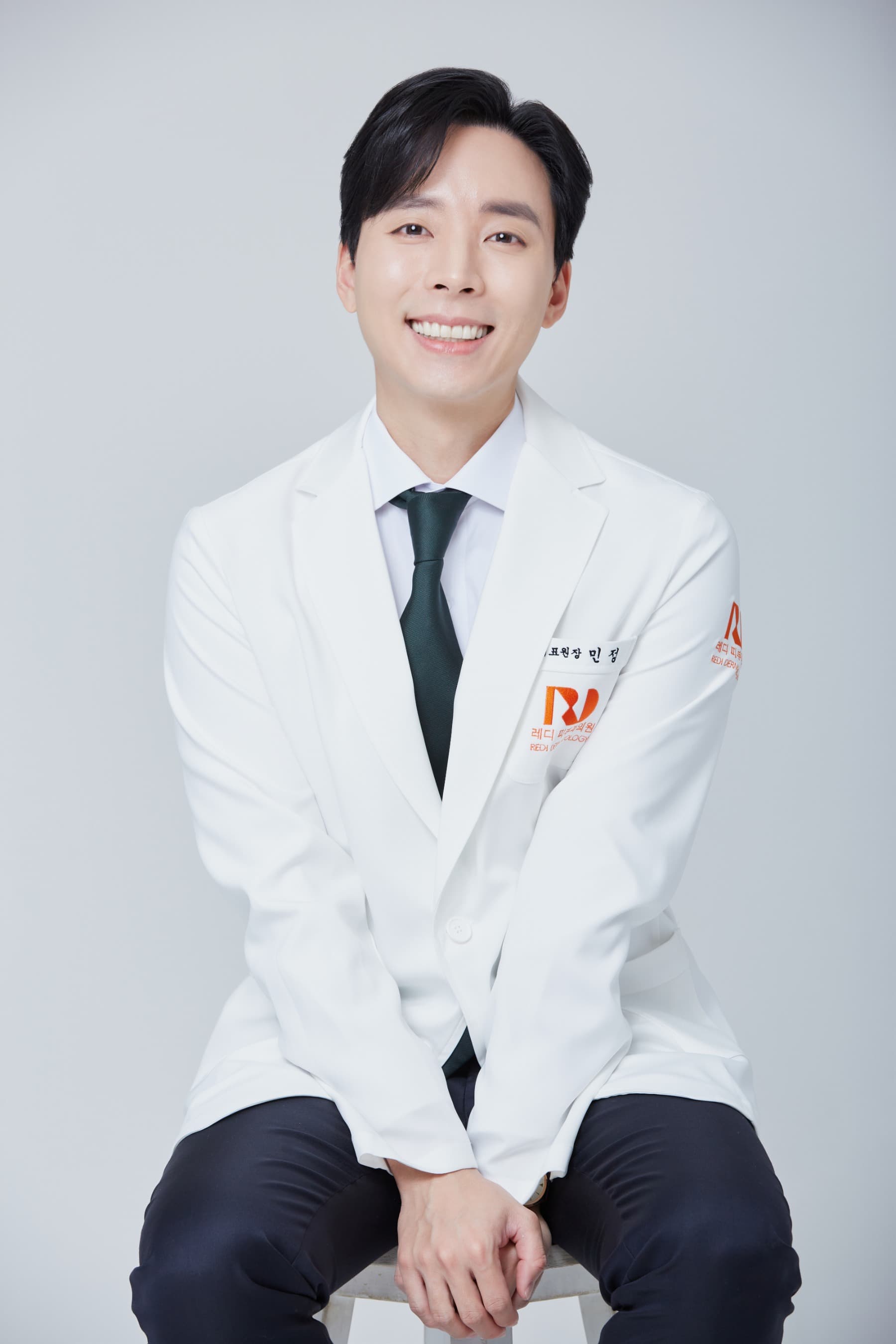
Dr. Min Jeong
Founding director, REDI Dermatology · Seoul
“A treatment isn't shopping. I'd rather diagnose first and recommend only what your skin genuinely needs — the same way I'd advise my own family.”
Board-certified dermatologist — trained at Kangbuk Samsung Hospital, and former Chief of Dermatology at the ROK Ministry of National Defense.
Juvelook Key Opinion Leader — 15,000+ vials administered, Korea's highest-volume clinic (Apr 2025). Key Opinion Leader titles are granted by device companies and carry no legal standing.
A regular speaker on clinical dermatology at Korean medical symposiums, including Juvelook clinical-experience panels.
Why international patients choose REDI
Interpreters in the room
English and Chinese, on site for your consultation and treatment.
Board-certified doctors only
Every procedure by a dermatology specialist — never unsupervised staff.
15,000+ Juvelook vials — No.1 in Korea
Hands-on volume most clinics have not reached.
Airport pickup arranged
So your first day in Seoul isn't spent lost with luggage.
Aftercare once you're home
Online follow-up, so a question next week still reaches your doctor.
Visit REDI Dermatology
4F & 5F, DM Tower Bldg. 2, 105 Bangbae-ro, Seocho-gu, Seoul, Korea
길찾기 (Get directions)Medically reviewed by Dr. Min Jeong, Founding Director / Board-Certified Dermatologist · Last updated
Edited by: Dr. Min Jeong
This article is general information, not medical advice. Results vary by individual. These are elective, non-insured aesthetic treatments. Please consult a board-certified doctor about your own case.
Ask what your skin actually needs
Free online consultation