
Is Korean Skin Treatment Safe? A Dermatologist's Honest Answer

Let me answer the question honestly, before you book anything
Hello, I'm Dr. Min Jeong, director of REDI Dermatology in Seoul. "Is Korean skin treatment safe?" is one of the most common questions I hear from patients flying in from abroad — and it deserves a straight, honest answer rather than reassurance for its own sake. The short version: non-surgical skin treatment done by a board-certified doctor who diagnoses your skin first is generally safe and well tolerated. But safety is not something a whole country guarantees for you. It comes down to who treats you and how. Please read to the end — I want you to leave knowing what to actually look for.
What "safe" really depends on (it's not the country)
There is a popular idea that a treatment is safe simply because it's "Korean." That's not how I think about it. Korea has a high concentration of aesthetic clinics and experienced doctors, which is a genuine advantage — but the same device, the same product, in two different hands, can give you a wonderful result or a disappointing one.

What actually determines safety is this: an accurate diagnosis of your skin, correct depth and intensity for your tissue, and a doctor honest enough to say "this one isn't for you." At REDI we are diagnosis-first — we review your skin condition, lifestyle, and goals before suggesting anything. When I look at a skin booster like Juvelook, I know from experience that the same product can behave very differently depending on the blend, the hydration protocol, and the injection technique. That's where safety and results both live.
The risks that are real — and how we manage them
I don't believe in "no side effects" language. Any effective treatment interacts with your skin, so honest risk talk is part of safe care. Here's the truth for the treatments international patients ask about most.
- Skin boosters (like Rejuran Healer or Juvelook): mild redness, small temporary bumps, or occasional bruising, usually settling within about 1–2 days.
- Energy-based lifting (Ultherapy Prime, RF devices): brief sensation during treatment, managed with numbing cream and cooling, with minimal downtime of roughly 1–2 days.
- Microneedle RF and lasers: possible redness or swelling for 1–3 days depending on the device and intensity.
The way we lower these risks isn't magic — it's control. We adjust depth and intensity by region rather than "maxing out" energy for a stronger-looking result. Over-treating is where trouble comes from, and restraint is a safety feature, not a compromise. If you want more depth on recovery specifically, I've written a full day-by-day recovery guide elsewhere.
Safety across different skin tones
This matters, and it's often glossed over. Not every skin type responds the same way, and pigment or laser work in particular carries a higher risk of post-inflammatory pigmentation on darker skin — Fitzpatrick IV to VI.
Being safe here means choosing gentler, gradual protocols — for example, toning designed to work across several low-intensity sessions rather than removing pigment aggressively in one go — and testing conservatively before committing to full settings. If you're coming with a deeper skin tone, ask any clinic directly how they adjust for it. A good answer is specific; a vague one is a warning sign. You can read more in my guide to hyperpigmentation treatment for international patients.
For patients flying in: the practical safety questions
When you're travelling for treatment, safety also means not being left alone with a problem. A few things I'd want you to have in place.
- Language: English- and Chinese-speaking interpreters are on site at REDI, and you can consult with us on WhatsApp before you even fly, so you're never guessing what's happening to your skin.
- Continuity of care: at REDI, the doctor who consults with you is the doctor who treats you. That continuity is part of safety, not just service.
- Timing your trip: plan around downtime. If you have redness or swelling for a day or two, you don't want it landing on your flight home. My flying-after-treatment timeline walks through this.
- After you leave: we offer online follow-up once you're home, so you can reach us with photos or questions.
Pricing for these elective, non-insured aesthetic treatments is discussed transparently at your consultation — I'd rather plan the right treatment for your skin than quote a number blind.
Takeaways
- "Is Korean skin treatment safe?" depends far less on the country and far more on the doctor: accurate diagnosis, correct depth and intensity, and honest risk talk.
- Non-surgical treatments like skin boosters and energy-based lifting are generally well tolerated, with mostly temporary effects — redness, mild swelling, small bumps, or bruising — that usually settle within 1–3 days. Results vary by individual.
- Safety comes from restraint: adjusting intensity to your skin rather than over-treating for a stronger-looking result.
- Darker skin tones (Fitzpatrick IV–VI) need careful, gradual protocols, especially for pigment and laser work.
- Travelling patients should confirm interpreter support, doctor continuity, downtime timing, and remote after-care before booking.
Frequently asked
Is Korean skin treatment safe for foreigners?
Non-surgical treatments like skin boosters, lasers, and energy-based lifting are generally well tolerated, but safety depends far more on diagnosis and technique than on the country. At REDI we assess your skin first, adjust intensity, and explain realistic risks before anything begins. Results vary by individual.
What are the real risks of skin boosters and lasers?
Common, temporary effects include redness, mild swelling, small bumps, or bruising that usually settle within 1–3 days depending on the treatment. The way to reduce risk is a doctor who diagnoses your skin, controls depth and intensity, and does not over-treat.
Are these treatments safe for darker skin tones?
They can be, but pigment and laser work in particular need careful parameter choices for Fitzpatrick IV–VI skin to lower the risk of post-inflammatory pigmentation. This is exactly why we diagnose skin type first rather than applying one fixed setting.
What if a problem appears after I fly home?
We offer online follow-up after you return, so you can send photos and reach us if you have concerns. Most temporary effects resolve on their own, but we want you to have a direct line either way.
Keep reading
More on this from Dr. Min Jeong.




Dr. Min Jeong
Founding director, REDI Dermatology · Seoul
“A treatment isn’t shopping. I’d rather diagnose first and recommend only what your skin genuinely needs — the same way I’d advise my own family.”
Board-certified dermatologist — trained at Kangbuk Samsung Hospital, and former Chief of Dermatology at the ROK Ministry of National Defense.
Recognized by VAIM as Korea's highest-volume Juvelook injector, with 15,000+ vials of hands-on experience; KOL for MIRAJET, Potenza and Oligio.
A regular speaker on clinical dermatology at Korean medical symposiums, including Juvelook clinical-experience panels.
Why international patients choose REDI
Interpreters in the room
English and Chinese, on site for your consultation and treatment.
Board-certified doctors only
Every procedure by a dermatology specialist — never unsupervised staff.
15,000+ Juvelook vials
Hands-on volume most clinics have not reached.
Airport pickup arranged
So your first day in Seoul isn't spent lost with luggage.
Aftercare once you're home
Online follow-up, so a question next week still reaches your doctor.
Explore the treatment
Rejuran Healer & Rejuran HB Plus
Rejuran Healer, a tissue-regenerating substance derived from salmon, is injected to effectively renew damaged skin. If you're sensitive to pain, Rejuran HB Plus — which contains lidocaine — offers a more comfortable treatment.
Ultherapy Prime
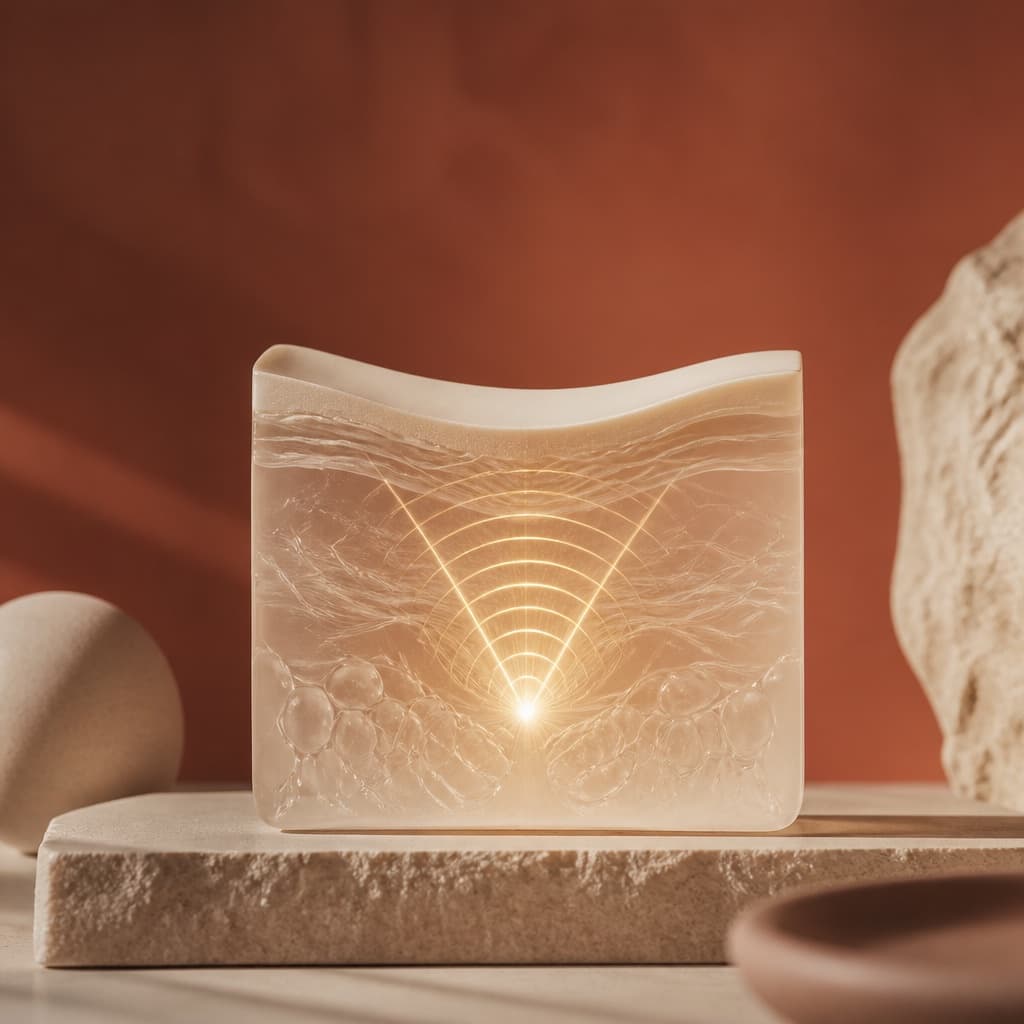
Ultherapy Prime is a globally validated non-surgical facelift. It delivers focused ultrasound energy precisely to the deep SMAS layer — the same layer addressed in surgical lifts — to contract the tissue that drives sagging and lift the contour without any incision. It can help with a softening jawline, neck, and eye area, and because it works by stimulating new collagen, results settle in gradually. At REDI, we diagnose your skin thickness and degree of laxity first, then design the depth and number of shots accordingly — prioritizing a lift that is both safe and genuinely noticeable over raw intensity.
Visit REDI Dermatology
4F & 5F, DM Tower Bldg. 2, 105 Bangbae-ro, Seocho-gu, Seoul, Korea
길찾기 (Get directions)Medically reviewed by Dr. Min Jeong, board-certified dermatologist · Last updated September 4, 2026
This article is general information, not medical advice. Results vary by individual. These are elective, non-insured aesthetic treatments. Please consult a board-certified doctor about your own case.