
Skin Treatment Downtime in Korea: A Day-by-Day Recovery Guide for Travelers

Why downtime is the first thing to plan, not the last
Hello, I'm Dr. Min Jeong, and I run REDI, a non-surgical dermatology clinic in Seoul. If you're flying in for skin treatment, the question I get asked before almost anything else is a practical one: "How many days will I need before I look normal again — and before I can get on a plane?" It's a fair question, and honestly, it's the right one to ask early. Please read to the end, because knowing the recovery timeline of each treatment is what lets you plan a trip that actually works.
"Downtime in Korea" isn't one number. It ranges from "back to sightseeing in an hour" to "expect a few days of redness or crusting." The mistake I see travelers make is booking the most intense treatment on their last day, then panicking about swelling at the airport. Let me walk you through how I actually think about it.
The three downtime tiers, honestly explained
At REDI, the treatments we offer sort fairly cleanly into three recovery bands. This is the framework I use when a patient tells me how long they're staying.
Tier 1 — Little to none (same-day back to normal). Many of our lifting and glow treatments fall here. Devices like Onda, Sofwave, Emface, and Tune Face are non-invasive and typically leave only slight, short-lived redness or warmth. Needle-free delivery like MIRAJET, and pigment work such as laser toning and pico toning, are also low-downtime — often just about 15–20 minutes of treatment and straight back to your day. LDM soothing is gentle enough to layer in almost anytime.
Tier 2 — Minimal, 1–2 days. This is where most injectable skin boosters sit. Rejuran Healer, Juvelook, Radiesse, and Helios IV pigment laser generally mean mild redness, minor swelling, or small temporary bumps that settle within roughly 24–48 hours. Ultherapy Prime lands here too — minimal downtime, with any tightening sensation easing quickly.
Tier 3 — A few days of visible recovery. Microneedle radiofrequency treatments — Potenza, Legato, Double Tite, Alltite, and Juvelook delivered for pores and scars — can bring 1–3 days of redness or swelling. Focal scar treatments go a little longer: CROSS and subcision can involve 3–5 days of crusting or redness because they work directly on deeper scar tissue.
None of these are "bad" downtimes — they simply need planning. Results vary by individual, and I always confirm your realistic timeline face-to-face before we begin.
A Day 0 → Week 1 calendar for a short trip
Let me make this concrete. Say you're in Seoul for a week and you'd like a skin booster plus a bit of tightening. Here's roughly how I'd map it, using Rejuran as the example.
- Day 0 (treatment day): For a Rejuran Healer session, expect mild redness and possibly small bumps at the injection points. Skin can look a little flushed for the evening. Nothing that stops you having a quiet dinner.
- Day 1–2: Redness and small bumps usually settle. This is the window where most people feel comfortable resuming normal activities — and, for low- and Tier-2 treatments, flying if needed.
- Day 3: Any residual swelling from a booster is typically gone. If we did a Tier-3 treatment like Potenza, this is often when the last of the redness fades.
- Week 1: Skin looks calm. With collagen-based treatments like Juvelook, the visible firming benefit hasn't even started yet — that builds over the following weeks and months. So the recovery is short, but the payoff is patient.
The practical rule I give travelers: front-load your higher-downtime treatment early in the trip, and finish with low-downtime care before you fly. That way you're never rushing to the airport with fresh redness. If your stay is only two or three days, we lean toward Tier 1 and Tier 2 and keep it simple.
Downtime looks different across skin tones
One thing I want international patients — especially those with deeper skin tones, Fitzpatrick IV–VI — to know: how skin shows recovery can differ. Redness reads differently, and certain lasers carry a different consideration for pigment-prone skin. This is exactly why I diagnose first rather than defaulting everyone to the same settings.
For pigment and laser work, I adjust the wavelength, intensity, and interval to your skin — for example, gentler, gradual toning across sessions rather than one aggressive pass. If you're weighing pigment options, my more detailed guide to hyperpigmentation treatment walks through how I sequence this safely. The goal is a result that's subtle and even, never overdone — and a recovery that behaves predictably for your skin, not a generic one.
Managing recovery once you've flown home
Downtime doesn't stop the moment your treatment ends, and neither does our care. Because I perform the consultation and the treatment myself, I know exactly what your skin received, which makes remote follow-up genuinely useful. If a bump lingers longer than expected or you're unsure whether something is normal, you can message us after you're back home and we'll advise. For boosters specifically, the aftercare habits in the first few days matter — if you want the detail, our note on skin booster aftercare covers what to do and avoid.
On the practical side: English and Chinese interpreters are on site, we can arrange airport pickup, and pricing for whatever we plan is discussed transparently at your consultation — these are elective, non-insured aesthetic treatments, so there are no surprises. If you message us on WhatsApp beforehand, we can rough out a plan that fits your travel window before you even land.
Takeaways
- Downtime in Korea isn't one number — it ranges from same-day recovery to a few days of visible healing, depending on the treatment.
- Tier 1 (little to none): Onda, Sofwave, Emface, Tune Face, MIRAJET, toning lasers, LDM.
- Tier 2 (minimal, 1–2 days): Rejuran, Juvelook, Radiesse, Ultherapy Prime, Helios IV.
- Tier 3 (a few days): microneedle RF like Potenza, Legato, Double Tite, Alltite; focal scar work like CROSS and subcision (3–5 days).
- Plan smart: front-load higher-downtime treatments early in your trip, finish with low-downtime care before you fly.
- Recovery varies by individual and by skin tone — I diagnose first, tailor intensity, and offer online aftercare once you're home.
Frequently asked
How much downtime do skin treatments in Korea usually need?
It depends entirely on the treatment. Many lasers and skin boosters need little to none — a day of mild redness at most. Microneedle radiofrequency and certain scar treatments can involve 1–3 days of redness or swelling, and focal scar work like CROSS or subcision can mean 3–5 days of crusting. Results vary by individual, so we plan your treatment around your travel dates.
How soon can I fly after a skin booster or laser?
For low-downtime treatments like Rejuran, Juvelook, or toning lasers, most patients feel comfortable flying within a day or two, as swelling and redness typically settle within 24–48 hours. We confirm timing at your consultation based on the exact treatment.
Which Korean skin treatments have almost no downtime?
Treatments described as "little to none" downtime include Emface, Onda, Tune Face, Sofwave, MIRAJET, laser and pico toning, and LDM. These suit short trips well, though sensation and recovery vary by person.
Will you help me plan treatments around my trip length?
Yes. Because we diagnose first and I perform the treatment myself, we sequence what fits your stay — front-loading higher-downtime work early in your trip and finishing with low-downtime care before you fly home. We also offer online aftercare once you're back.
Keep reading
More on this from Dr. Min Jeong.




Dr. Min Jeong
Founding director, REDI Dermatology · Seoul
“A treatment isn't shopping. I'd rather diagnose first and recommend only what your skin genuinely needs — the same way I'd advise my own family.”
Board-certified dermatologist — trained at Kangbuk Samsung Hospital, and former Chief of Dermatology at the ROK Ministry of National Defense.
Juvelook Key Opinion Leader — 15,000+ vials administered, Korea's highest-volume clinic (Apr 2025). Key Opinion Leader titles are granted by device companies and carry no legal standing.
A regular speaker on clinical dermatology at Korean medical symposiums, including Juvelook clinical-experience panels.
Why international patients choose REDI
Interpreters in the room
English and Chinese, on site for your consultation and treatment.
Board-certified doctors only
Every procedure by a dermatology specialist — never unsupervised staff.
15,000+ Juvelook vials — No.1 in Korea
Hands-on volume most clinics have not reached.
Airport pickup arranged
So your first day in Seoul isn't spent lost with luggage.
Aftercare once you're home
Online follow-up, so a question next week still reaches your doctor.
Explore the treatment
Rejuran Healer & Rejuran HB Plus
Rejuran Healer, a tissue-regenerating substance derived from salmon, is injected to effectively renew damaged skin. If you're sensitive to pain, Rejuran HB Plus — which contains lidocaine — offers a more comfortable treatment.
Ultherapy Prime
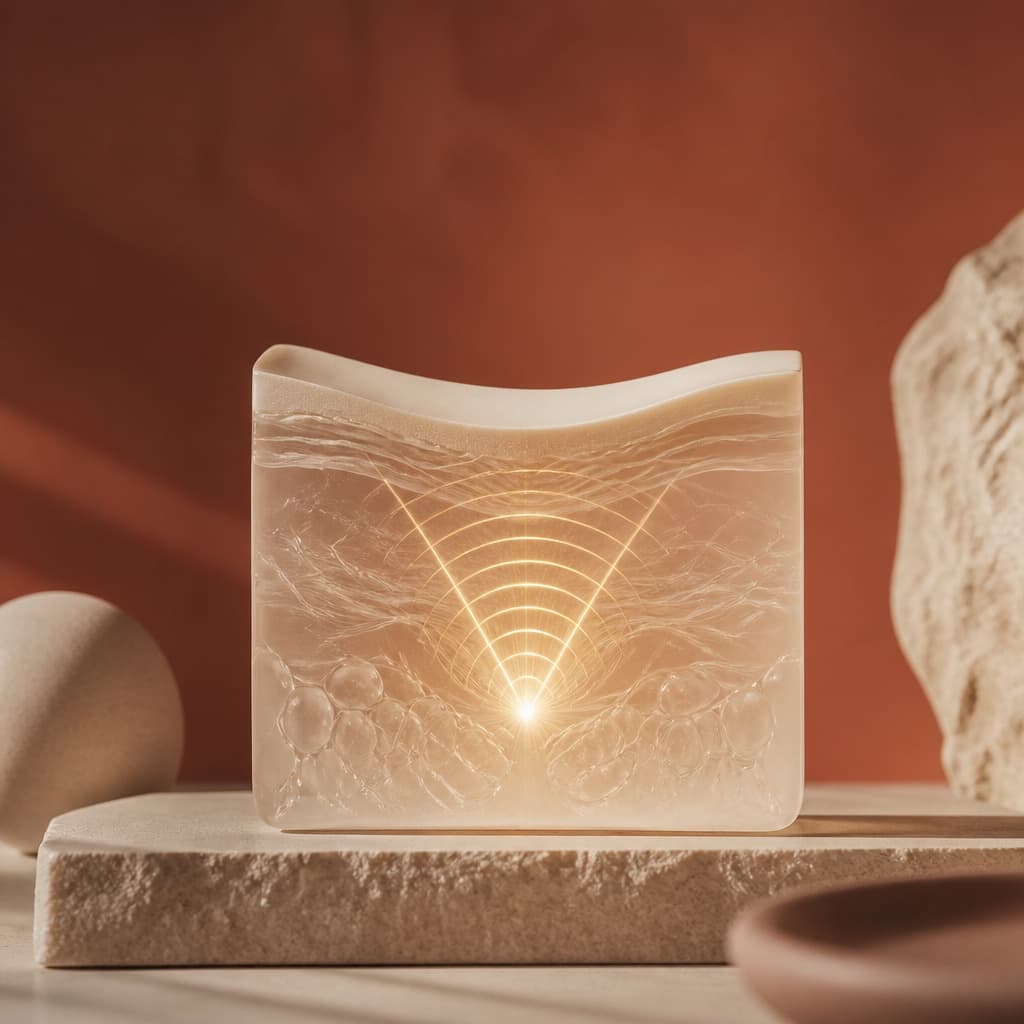
Ultherapy Prime is a globally validated non-surgical facelift. It delivers focused ultrasound energy precisely to the deep SMAS layer — the same layer addressed in surgical lifts — to contract the tissue that drives sagging and lift the contour without any incision. It can help with a softening jawline, neck, and eye area, and because it works by stimulating new collagen, results settle in gradually. At REDI, we diagnose your skin thickness and degree of laxity first, then design the depth and number of shots accordingly — prioritizing a lift that is both safe and genuinely noticeable over raw intensity.
Visit REDI Dermatology
4F & 5F, DM Tower Bldg. 2, 105 Bangbae-ro, Seocho-gu, Seoul, Korea
길찾기 (Get directions)Medically reviewed by Dr. Min Jeong · Last updated
This article is general information, not medical advice. Results vary by individual. These are elective, non-insured aesthetic treatments. Please consult a board-certified doctor about your own case.
Ask what your skin actually needs
Free online consultation