
Temple Filler: Why Hollow Temples Change a Face More Than You Expect

Hello — I'm Dr. Min Jeong, founding director of REDI Dermatology in Seoul.
Temple filler is the treatment patients almost never ask for and frequently need. Someone comes in concerned about the mid-face or the jawline, and the shadow doing most of the ageing work is sitting higher up, beside the eye. This is what I explain when I point at the hollow in the mirror and the patient says they had never noticed it was there.
Where the hollow actually is
The temple is the soft area at the side of the forehead, between the tail of the eyebrow and the hairline, just above the cheekbone. In a youthful face it is gently convex or flat. As volume is lost, it becomes concave.
That concavity casts a shadow. Because it sits directly beside the eye, the shadow reads as tiredness across the whole upper third of the face — and it makes the bony rim around the eye socket more prominent, which reads as age rather than as a hollow temple.
This is why temple filler often produces a change out of proportion to the volume involved. You are not filling a large area; you are removing a shadow that was doing a great deal of work. It is also why temple filler is so often the thing that resolves a complaint the patient had located somewhere else entirely.
Why temples hollow
Three things happen together.
Fat pads thin. The temple has its own compartments of fat, and they reduce with age like the others.
Supporting tissue loses volume. Collagen in the dermis thins, so the overlying skin sits closer to the structure beneath.
Bone remodels. Subtly, but the eye socket widens slightly over decades, which deepens the transition into the temple.
Weight loss compresses this timeline dramatically. Patients frequently notice hollow temples after a period of dieting rather than gradually with age — the face loses volume before anything else does, and the temple shows it early.
How I approach it at REDI
Temple filler is a procedure where I care more about depth and anatomy than about product. There are vessels here that matter, and a plan that treats the temple as simply another place to add volume is a plan I would not follow.
Where the priority is restoring structure, Juvelook Volume works by stimulating your own collagen, so the change builds over weeks rather than appearing entirely at the appointment. That gradual quality suits the temple, because it is very easy to overshoot an area this visible and the slow build gives us a chance to assess.
Where more immediate structural support is appropriate, Radiesse provides volume alongside a collagen-stimulating effect. Which of these I suggest depends on how deep the hollow is, your skin thickness over it, and what you want the timeline to look like.
Where the skin itself has thinned and the surface reads crepey as well as hollow, Juvelook addresses the quality of the skin over the area rather than the volume under it. Sometimes that is actually the thing bothering the patient, and adding volume alone would not have solved it.
With temple filler I would rather treat conservatively and reassess in a few weeks than fill to a target in one sitting. This area is unforgiving of enthusiasm.
What to realistically expect
Patients most often describe the result as looking rested rather than looking different. That is the outcome I aim for here — the shadow lifts and the eye area reads less drawn, without the face announcing that something has been done.
If we are using a collagen-stimulating approach, the change arrives gradually over weeks, which means the appointment itself is anticlimactic. I mention this deliberately, because a patient expecting an immediate result from a gradual treatment will judge it on the wrong day.
Results vary by individual, and the degree of change depends on how much volume has been lost.
Downtime, sessions and timing
After temple filler, injection points settle within a day or two for most people, and bruising is possible — this is not a region I would treat the day before something photographed.
If you are flying in, tell us the travel dates first. For collagen-stimulating approaches especially, the meaningful assessment happens weeks later, when you are home. That is workable: aftercare continues online once you have left Korea, and a photograph at week six tells me more than a rushed second appointment before your flight.
Interpreters are on site for the consultation and the procedure, which matters in an area where I want you to understand exactly what is being placed and where.
How I think about cost
I do not publish a figure, because it depends on which approach suits your temples and how much volume is involved. You will hear the full plan, including whether I think you need one session or a staged approach, before anything begins.
Takeaways
Hollow temples create a shadow beside the eye that ages the upper face more than their size suggests, and temple filler often reads as looking rested rather than treated. Weight loss brings the hollowing on faster than age alone.
Temple filler is a procedure where anatomy and restraint matter. Less, assessed a few weeks later, is usually the better plan.
Frequently asked
What does temple filler do?
It restores volume in the hollow at the side of the forehead, above the cheekbone and beside the eye. Because that hollow casts a shadow across the upper face, filling it usually changes how rested the whole face looks rather than just that one area.
Why do temples become hollow?
Fat pads thin, bone remodels slightly and the supporting tissue loses volume with age. Rapid weight loss accelerates it noticeably, which is why people often see it after a period of dieting rather than gradually.
Is temple filler safe?
The temple contains important vessels, which is why anatomy and injection depth matter more here than in many other areas. This is a region I treat personally rather than delegate. I will discuss the specifics with you before anything is done.
How long does it last?
It depends entirely on what is used. Products that add volume directly behave differently from those that stimulate your own collagen over weeks. I will explain the expected duration of whichever suits you. Results vary by individual.
Will it make my face look wider?
Restoring temple volume generally makes the upper face read smoother and less drawn, not wider. Over-filling can look heavy, which is the main reason I would rather do less and reassess than fill to a target in one sitting.
Keep reading
More on this from Dr. Min Jeong.




Dr. Min Jeong
Founding director, REDI Dermatology · Seoul
“A treatment isn't shopping. I'd rather diagnose first and recommend only what your skin genuinely needs — the same way I'd advise my own family.”
Board-certified dermatologist — trained at Kangbuk Samsung Hospital, and former Chief of Dermatology at the ROK Ministry of National Defense.
Juvelook Key Opinion Leader — 15,000+ vials administered, Korea's highest-volume clinic (Apr 2025). Key Opinion Leader titles are granted by device companies and carry no legal standing.
A regular speaker on clinical dermatology at Korean medical symposiums, including Juvelook clinical-experience panels.
Why international patients choose REDI
Interpreters in the room
English and Chinese, on site for your consultation and treatment.
Board-certified doctors only
Every procedure by a dermatology specialist — never unsupervised staff.
15,000+ Juvelook vials — No.1 in Korea
Hands-on volume most clinics have not reached.
Airport pickup arranged
So your first day in Seoul isn't spent lost with luggage.
Aftercare once you're home
Online follow-up, so a question next week still reaches your doctor.
Explore the treatment
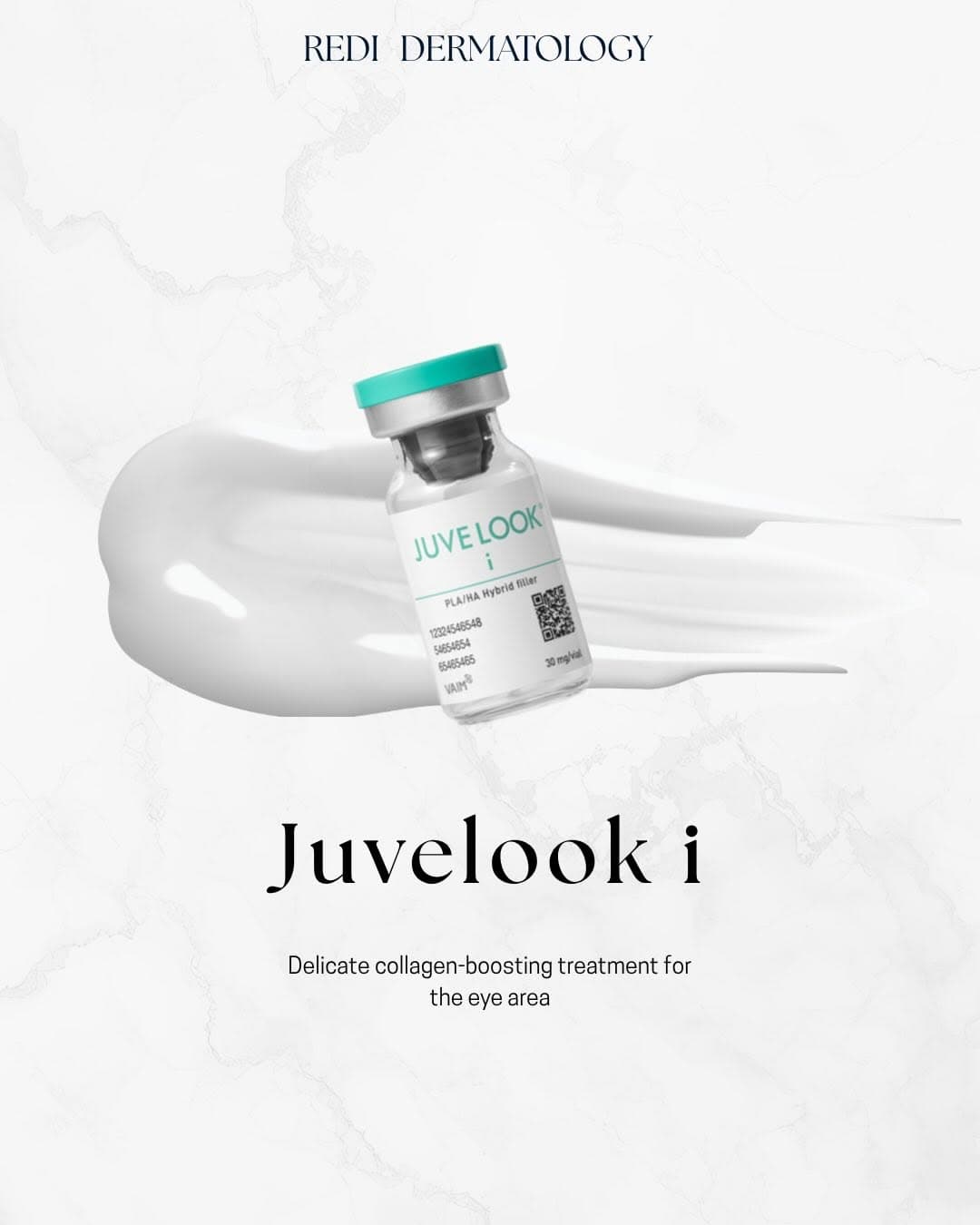
Juvelook Volume
A special blend and hydration know-how developed by our Juvelook key doctor. Its PDLLA component stimulates collagen production, creating the most natural volume — your own skin's volume — in areas like nasolabial folds, hollow cheeks, and sunken temples.

Radiesse
A next-generation collagen booster made with CaHA, delivering both a skin-booster effect that smooths wrinkles and texture and a volumizing effect — all at once.
Juvelook Skin Booster
Juvelook is a PDLLA (poly-D,L-lactide) collagen booster that stimulates your skin's own collagen production to improve pores, firmness, fine lines, scars, and overall tone. Unlike a filler that simply adds volume, it helps the skin rebuild itself, so results develop naturally over time. At REDI, the blend and hydration protocol was refined by our Juvelook key doctor, and we match the delivery method — Dermashine Pro, Potenza, MIRAJET, Double Tite, and more — to your specific skin condition. With 15,000+ vials of hands-on experience, we know that the same product can deliver very different results depending on technique.
Visit REDI Dermatology
4F & 5F, DM Tower Bldg. 2, 105 Bangbae-ro, Seocho-gu, Seoul, Korea
길찾기 (Get directions)Medically reviewed by Dr. Min Jeong · Last updated September 23, 2026
This article is general information, not medical advice. Results vary by individual. These are elective, non-insured aesthetic treatments. Please consult a board-certified doctor about your own case.
Ask what your skin actually needs
Free online consultation