
Juvelook Volume: Why It Works Slowly, Where It Works Well, and Who It Isn't For
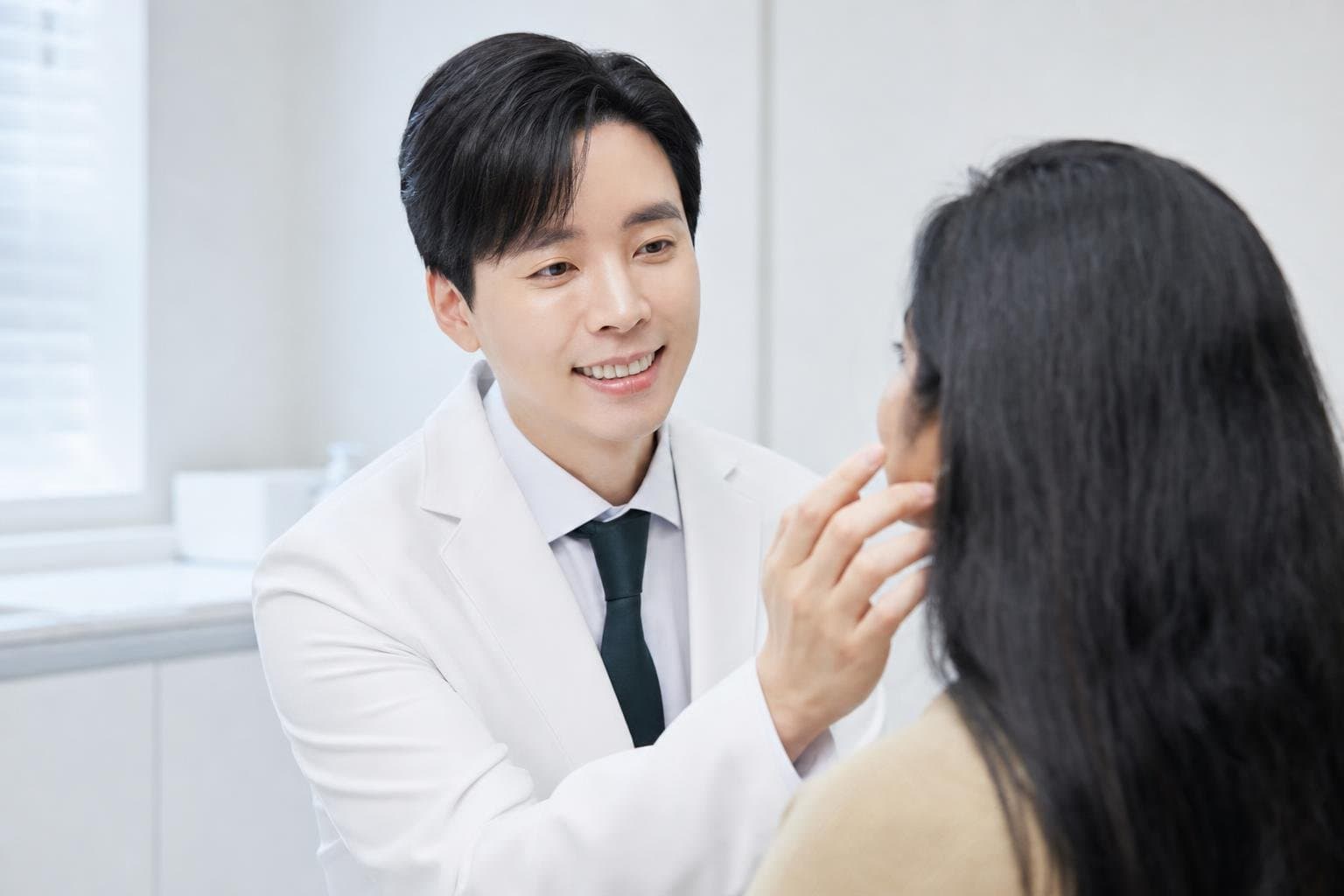
Hello — I'm Dr. Min Jeong, the founding dermatologist at REDI Dermatology in Seoul.
Juvelook Volume is one of the treatments I perform most, and one of the most misunderstood. Patients often tell me a previous clinic gave it to them and "nothing happened." Usually something did happen — just slowly, and in a way that is easy to miss. This article covers what Juvelook Volume actually does, where it works, where I would not use it, and what I tell patients before we begin. Please read to the end; the last sections matter most if you are flying in.
What Juvelook Volume is, and what it isn't
Juvelook Volume is a collagen stimulator made from PDLLA (poly-D,L-lactic acid) combined with hyaluronic acid. It is not a filler in the usual sense. A filler is a gel that holds its shape where it is placed. PDLLA works differently: it prompts the fibroblasts in your dermis to produce new collagen, and then the PDLLA itself gradually breaks down into water and carbon dioxide. What remains is your own tissue.
It belongs to the same family as the Juvelook skin booster, but the two do different jobs. The skin booster uses smaller particles placed more superficially, for texture, pores and fine lines. Juvelook Volume uses larger particles and considerably more material per vial, placed deeper, to restore volume where the face has hollowed. If texture and pores are your main concern rather than hollowing, my article on how the Juvelook skin booster works is the better place to start.
Why Juvelook Volume can feel like "nothing happened"
Right after treatment, you will see some fullness. Most of that is the fluid the powder was dissolved in, and it fades over about a week. Then the real work starts: collagen builds quietly over the following months.
I compare it to gaining three kilograms. Put on in a single week, everyone notices. Put on over six months, nobody does — including you. The change is the same size; the speed is what makes it invisible. That is the great strength of Juvelook Volume, because the result looks like you rather than like a treatment. It is also why a patient who expected a dramatic change can feel disappointed.
So when someone tells me it "didn't work," the first thing I do is look at photographs taken in the same light, months apart. The mirror is a poor judge of slow change.
Where it works well — and where I don't use it
Because the volume arrives gradually and spreads through tissue, this is not a tool for precise, sculpted shapes. It is a tool for broad areas that have deflated.
| Area | Suitability | Why |
|---|---|---|
| Front and side cheeks | Well suited | Broad hollowing; gradual fill looks natural |
| Temples | Well suited | Wide, shallow area; migration is not a concern |
| Nasolabial area | Suited, usually alongside the cheeks | Treating the surrounding support gives a softer result than chasing the fold alone |
| Forehead, chin, nose | Not recommended | These need precise shaping that a gradual stimulator cannot give |
Two further advantages matter for patients who have been nervous about fillers. Since the new volume is your own collagen, it does not move with facial expression, and it cannot be felt as a separate material under the skin. And because PDLLA is not a cohesive gel, the risk of it blocking a blood vessel — the most serious complication with fillers — is very low.
Before and after at REDI
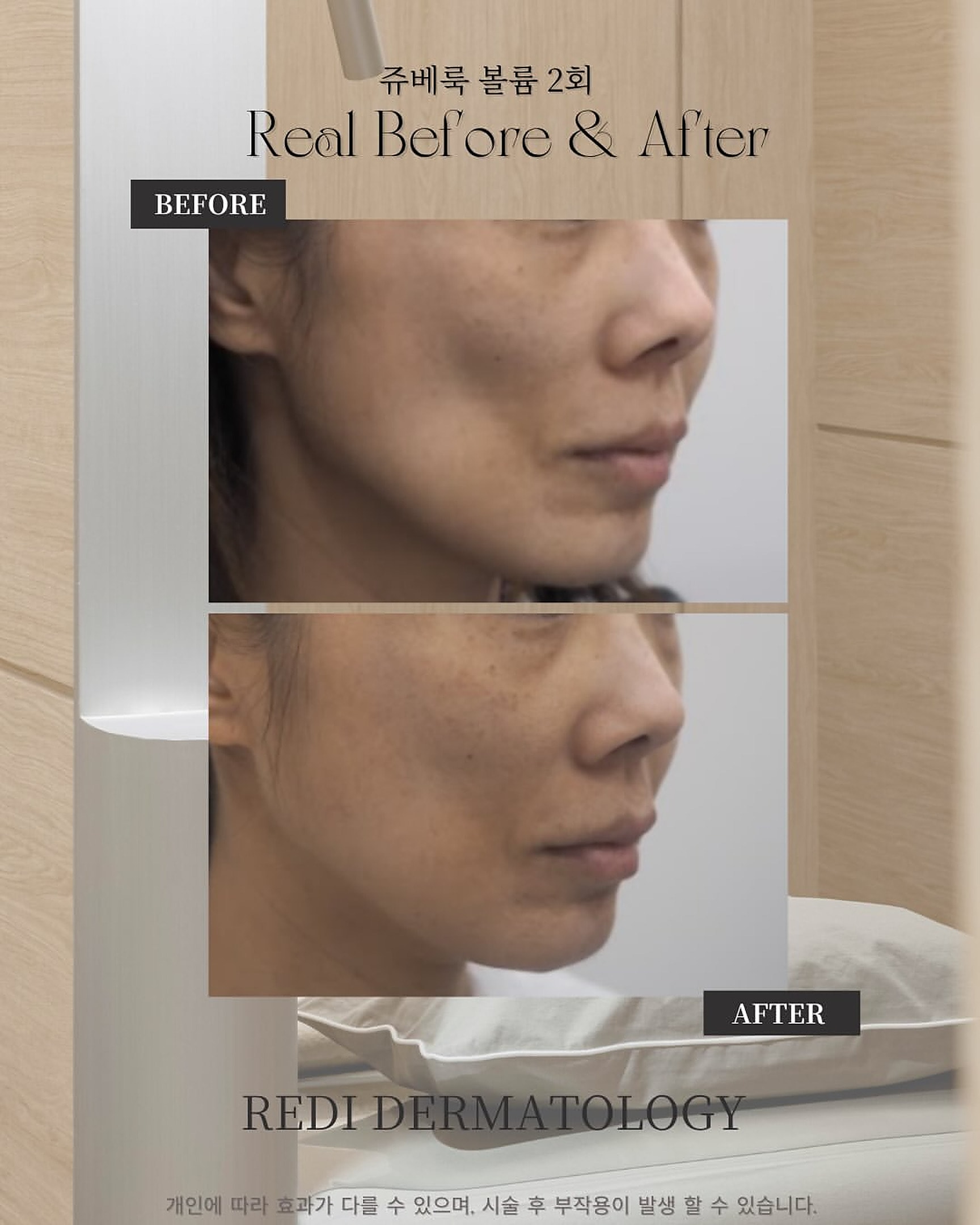
Protocol: Juvelook Volume, 2 sessions
Swelling, redness and bruising are possible and usually settle within a few days. Cost is confirmed at your consultation — we do not publish a price list.
Results vary by individual.
Published with the patient's consent. Elective, non-insured aesthetic treatment.
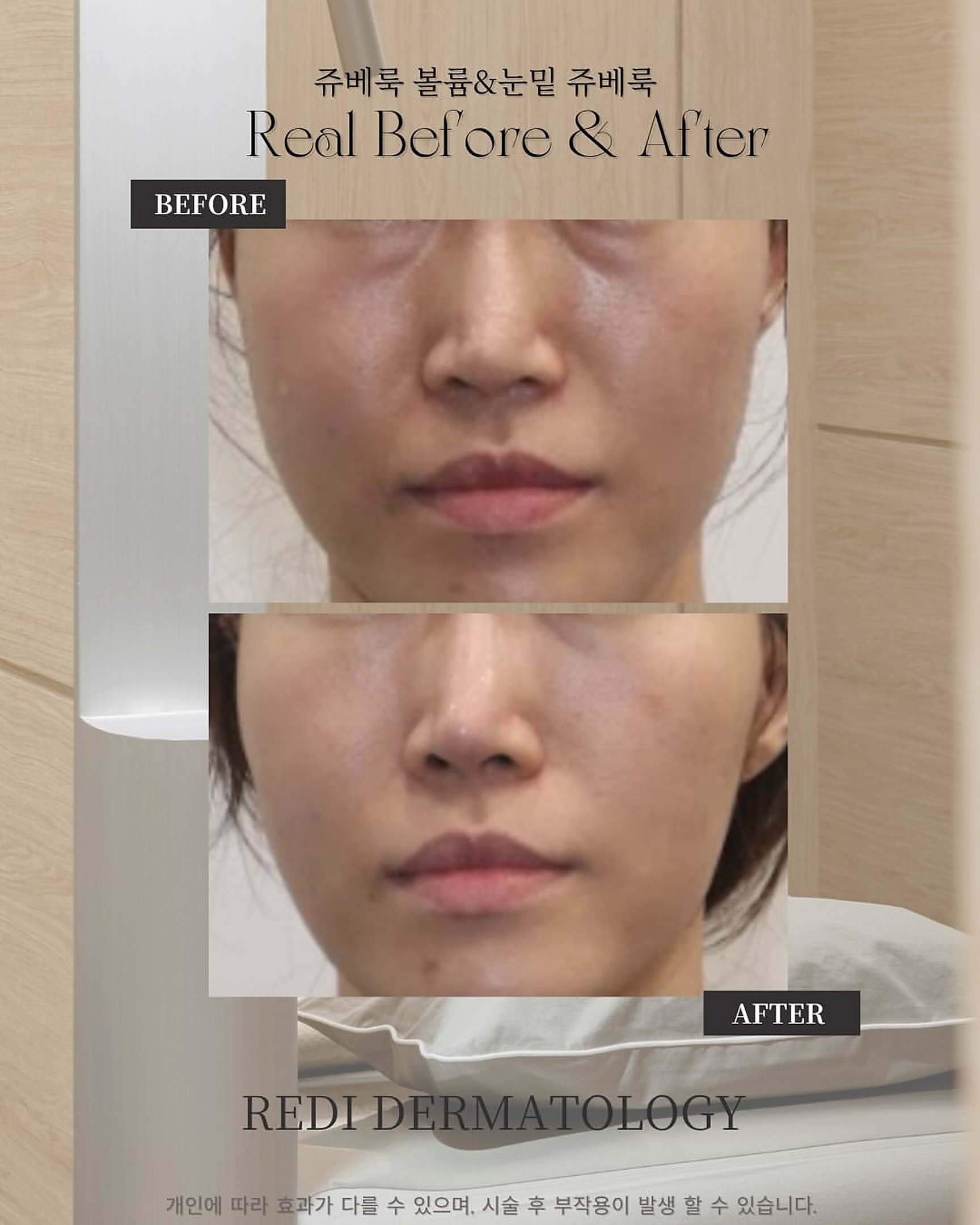
Protocol: Juvelook Volume & under-eye Juvelook
Swelling, redness and bruising are possible and usually settle within a few days. Cost is confirmed at your consultation — we do not publish a price list.
Results vary by individual.
Published with the patient's consent. Elective, non-insured aesthetic treatment.
Juvelook vs Sculptra, and where HA filler fits
This is one of the most common questions I get, so here is how I explain it.
| HA filler | Sculptra (PLLA) | Juvelook Volume (PDLLA) | |
|---|---|---|---|
| How it works | Gel placed directly | Stimulates collagen | Stimulates collagen |
| When you see it | Immediately | Gradually, over months | Gradually, over months |
| Particle shape | — | Crystalline, sharp-edged | Rounded, amorphous |
| Tissue reaction | — | Stronger | Milder |
| Glow effect | — | No | Yes, from the hyaluronic acid |
The two are close chemical relatives, but the particle shape changes how the body responds. Sharp crystalline particles provoke a stronger immune reaction and take longer to clear, so if a nodule does form, it tends to last longer and be harder to manage. The rounded PDLLA particles in Juvelook Volume provoke a milder reaction and break down sooner. That is why, for the face, I generally prefer it. It also contains hyaluronic acid, so many patients notice a hydrated glow as a side benefit.
If you need an instant, precise change for a specific date, a gradual collagen stimulator is simply the wrong tool, and I will say so at consultation. For patients whose main concern is sagging rather than hollowing, Radiesse or a lifting device may be the better starting point.
How I prepare it: hydration decides more than half the result
Juvelook Volume arrives as a powder and has to be dissolved — "hydrated" — before it can be injected. If I had to divide the credit for a good result, I would give more than half to hydration, about a third to design, and the rest to injection technique. Poorly hydrated product injects unevenly, clogs needles, and is the main reason nodules form.
Three rules I follow at REDI:
- One full vial per patient. Treating only the nasolabial area uses far less than a vial, and it is tempting to store the rest for another patient. I don't, because hydrated product cannot be kept at its best condition. Instead, if the nasolabial area is your main concern, we focus there and use the rest to support the cheeks and temples around it.
- Thorough hydration, no sediment. The powder is dissolved completely before any injection begins.
- A blunt cannula. A cannula pushes vessels aside rather than piercing them, which keeps bruising and swelling down.
Nodules: the honest answer
You will find frightening stories online about lumps after collagen stimulators. So let me be direct: if a clinic tells you nodules are "never" a possibility, be cautious. Either they have not treated many patients, have not followed them up, or are not being straight with you.
What matters is prevention and knowing what you are feeling. Firmness in the first days after treatment is almost always swelling or a small bruise, not a nodule. A true nodule is an uncommon immune reaction that appears weeks later rather than the next morning, and it can be managed. Careful hydration is what keeps it uncommon.
Sessions and a realistic timeline
- Course: usually three sessions, about a month apart.
- Each session: about 30 minutes, including numbing where needed.
- After each session: early fullness from the fluid fades over about a week.
- Final result: judged one to two months after the last session, as collagen continues to build.
Results vary by individual, and the amount of volume lost at the start sets how much a course can restore. I would rather tell you that before we begin than after.
Planning Juvelook Volume around a flight
Downtime is minimal, usually one to two days of mild swelling. A realistic calendar for a visitor:
- Day 0: treatment. Mild swelling and possibly a small bruise at the entry point.
- Day 1–2: swelling settles; most people are back to sightseeing and dinners.
- Later that week: comfortable to fly.
The bigger planning question is the course. Three sessions a month apart do not fit a single short trip. Many international patients start the first session in Seoul and plan the next ones around later visits. Tell us your travel dates before we plan, and we will be honest about what fits.
For international patients
English- and Chinese-speaking interpreters are on site for the consultation and the treatment, and I see you myself from consultation through treatment. Because most of the change happens after you have gone home, follow-up continues online — a photo at week four in consistent light tells me more than you might expect. Juvelook Volume is an elective, non-insured aesthetic treatment, and cost is explained in full at consultation, once we know how much volume you need to restore.
A note on the title you may see on our site: REDI has been recognised as a Juvelook Key Opinion Leader clinic, with 15,000+ Juvelook vials administered. Designations like this are granted by device and product companies and have no legal standing; I mention it only because it reflects how much of this work we do.
Takeaways
- Juvelook Volume is a PDLLA collagen stimulator, not a filler. It restores volume with your own collagen, gradually.
- Early fullness fades within about a week; the real result builds over months, so judge it with photos, not the mirror.
- It suits broad hollows — cheeks, temples and the area around the nasolabial folds — and not precise shaping of the forehead, chin or nose.
- Hydration decides more than half the result. One full vial per patient and a blunt cannula are how we keep nodules uncommon.
- Plan on about three sessions a month apart, with downtime of one to two days each time.
More from the clinic
Frequently asked
What is Juvelook Volume?
It is a PDLLA collagen stimulator designed for areas that have lost volume, such as hollow cheeks, sunken temples and the nasolabial area. Instead of placing a gel under the skin, it prompts your own collagen to rebuild the area gradually, so the result looks like your own tissue.
How is Juvelook Volume different from the regular Juvelook skin booster?
They share the same PDLLA principle but serve different purposes. The skin booster is placed more superficially for texture, pores and fine lines. Juvelook Volume uses larger particles and more material per vial, placed deeper, to restore volume.
How many sessions of Juvelook Volume do I need?
I usually plan three sessions about a month apart. Because each session adds collagen gradually, the final result is judged one to two months after the last one. Your exact plan depends on how much volume has been lost. Results vary by individual.
What is the downtime after Juvelook Volume?
Downtime is minimal — typically one to two days of mild swelling, and sometimes a small bruise at an entry point. Most people return to normal activities the next day.
Juvelook vs Sculptra — which is better?
Both stimulate collagen. Sculptra is PLLA; Juvelook is PDLLA, which in my experience provokes a milder tissue reaction and breaks down sooner, which is why I prefer it for the face. The better choice still depends on the area and the depth of volume loss.
Can Juvelook Volume cause lumps or nodules?
True nodules are uncommon, but no honest clinic can promise they never happen. The biggest factor in preventing them is how thoroughly the powder is hydrated before injection. Firmness you feel the next day is usually swelling, not a nodule.
Keep reading
More on this from Dr. Min Jeong.




Dr. Min Jeong
Founding director, REDI Dermatology · Seoul
“A treatment isn't shopping. I'd rather diagnose first and recommend only what your skin genuinely needs — the same way I'd advise my own family.”
Board-certified dermatologist — trained at Kangbuk Samsung Hospital, and former Chief of Dermatology at the ROK Ministry of National Defense.
Juvelook Key Opinion Leader — 15,000+ vials administered, Korea's highest-volume clinic (Apr 2025). Key Opinion Leader titles are granted by device companies and carry no legal standing.
A regular speaker on clinical dermatology at Korean medical symposiums, including Juvelook clinical-experience panels.
Why international patients choose REDI
Interpreters in the room
English and Chinese, on site for your consultation and treatment.
Board-certified doctors only
Every procedure by a dermatology specialist — never unsupervised staff.
15,000+ Juvelook vials — No.1 in Korea
Hands-on volume most clinics have not reached.
Airport pickup arranged
So your first day in Seoul isn't spent lost with luggage.
Aftercare once you're home
Online follow-up, so a question next week still reaches your doctor.
Explore the treatment
Juvelook Volume
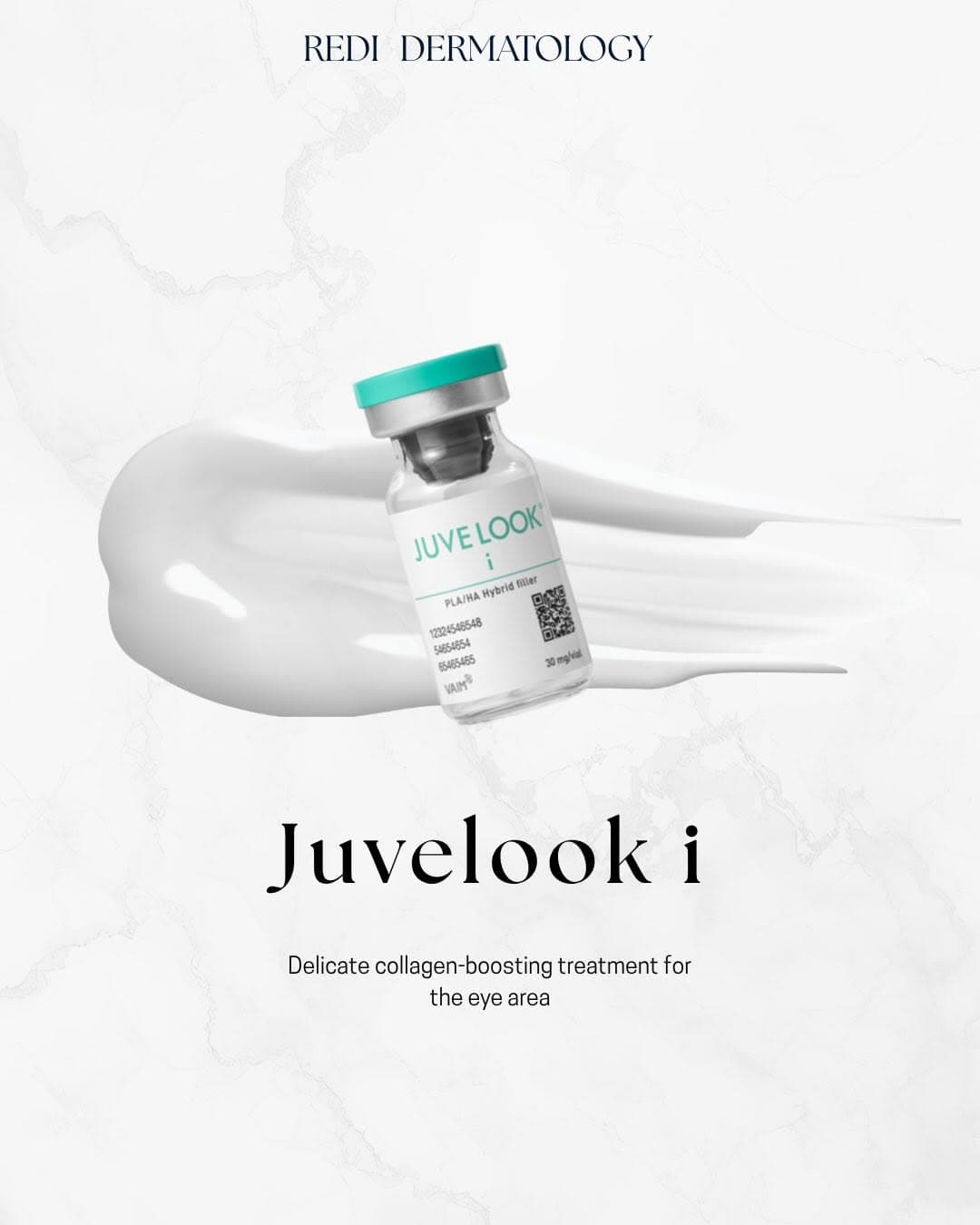
A special blend and hydration know-how developed by our Juvelook key doctor. Its PDLLA component stimulates collagen production, creating the most natural volume — your own skin's volume — in areas like nasolabial folds, hollow cheeks, and sunken temples.
Juvelook Skin Booster
Juvelook is a PDLLA (poly-D,L-lactide) collagen booster that stimulates your skin's own collagen production to improve pores, firmness, fine lines, scars, and overall tone. Unlike a filler that simply adds volume, it helps the skin rebuild itself, so results develop naturally over time. At REDI, the blend and hydration protocol was refined by our Juvelook key doctor, and we match the delivery method — Dermashine Pro, Potenza, MIRAJET, Double Tite, and more — to your specific skin condition. With 15,000+ vials of hands-on experience, we know that the same product can deliver very different results depending on technique.

Radiesse
A next-generation collagen booster made with CaHA, delivering both a skin-booster effect that smooths wrinkles and texture and a volumizing effect — all at once.
Visit REDI Dermatology
4F & 5F, DM Tower Bldg. 2, 105 Bangbae-ro, Seocho-gu, Seoul, Korea
길찾기 (Get directions)Medically reviewed by Dr. Min Jeong · Last updated
This article is general information, not medical advice. Results vary by individual. These are elective, non-insured aesthetic treatments. Please consult a board-certified doctor about your own case.
Ask what your skin actually needs
Free online consultation