
Skin Booster: What It Actually Is, and How to Pick the Right One for Your Skin

Hello — I'm Dr. Min Jeong, founding director of REDI Dermatology in Seocho, Seoul. Most weeks someone sits down in my consultation room and says a version of the same sentence: "I want a skin booster, but I have no idea which one." That is a fair place to be stuck. Skin booster is a category, not a product — rather like the word "antibiotic". Below is how I sort that category out, in the same order I sort it out in clinic. Please read to the end; the sections on downtime and on flying are the ones international patients ask me about most.
What a skin booster actually is — and what it isn't
A skin booster is material delivered into the dermis — by fine needle, by a multi-injector, or through a microneedling handpiece — so that the skin starts working on itself from the inside. A cream stays on the surface and does surface work. A booster does not. In Europe you will hear the same idea described as biorevitalization; in Korea we simply say booster and then argue about which one.
It is not a filler. A filler adds volume exactly where you place it, straight away. A booster asks your skin to rebuild or rehydrate itself, so the change arrives over weeks and reads as your own skin looking better rather than as something added. It is also not a laser: boosters do not resurface or remove pigment. What they do address is skin hydration, texture, fine lines, firmness and general condition. Results vary by individual.
The skin booster families I actually use
There are dozens of product names circulating on Instagram, and new ones every season. At REDI I work mostly with three families, because they answer three genuinely different questions.
Collagen stimulation: Juvelook
Juvelook Skin Booster is a PDLLA collagen booster. Instead of adding volume, it prompts your own collagen production, which is why it suits pores, fine lines, firmness, tone and softened acne scars together. A session runs about 30 minutes, with minimal downtime of roughly one to two days.
This is the treatment our clinic knows best: 15,000+ Juvelook vials administered — designated Korea's highest-volume Juvelook clinic (April 2025). That volume matters for a practical reason. The same vial behaves differently depending on the blend, the depth and the delivery. Our blend and hydration protocol was refined in-house, and we match the delivery method — Dermashine Pro, Potenza, MIRAJET, Double Tite — to the skin in front of us rather than to a fixed menu. Results vary by individual.
Repair and calm: Rejuran
Rejuran Healer & Rejuran HB Plus uses a tissue-regenerating substance derived from salmon to renew damaged skin. It leans toward texture, hydration and the skin's own resilience. A session takes around 20 minutes, downtime one to two days. If you are sensitive to pain, HB Plus contains lidocaine and is noticeably more comfortable. For skin that flushes easily, we use Rejuran with soothing as the goal instead.
Signalling and glow: exosomes
An Exosome Skin Booster delivers exosomes — messenger vesicles from stem-cell cultures — to support cell-to-cell signalling and the skin's renewal environment. I reach for it when the complaint is overall dullness, barrier condition and glow, or when we are layering it with another treatment. About 20–30 minutes, roughly one day of downtime, with mild redness possible if microneedling is used.
Patients also message me about names they have read online — RE20, Curenex, and whatever launched last month. RE20, for instance, belongs to a different idea again: placing dermal matrix directly, rather than asking your skin to build it. I have treated with it and written about it on my Korean blog. At consultation I will tell you plainly which products I use, which I don't, and why. Pretending every name on the market is equivalent would not help you.
How I match a skin booster to your skin
We are diagnosis-first, and I mean that literally: a specialist reads your skin in person before anything is recommended, and the same doctor performs the treatment. REDI is an individual clinic, not a high-volume chain, so we recommend only the treatment you actually need — not the most expensive one. Every treating doctor here is a board-certified dermatologist, among the top 2% of Korean physicians.
| What bothers you most | Where I usually start |
|---|---|
| Enlarged pores, fine lines, loss of firmness | Juvelook |
| Rough texture, fragile barrier, skin that flushes | Rejuran |
| Dullness, overall condition, layering with other treatments | Exosome |
This table is a starting point, not a verdict. Plenty of patients end up with a combination across two visits. Results vary by individual. If you want the longer version of this reasoning, I wrote it out in my guide to choosing a skin booster in Korea.
Downtime, and when you can fly
This is the question that decides your trip, so here is the honest calendar for the boosters above.
Day 0 — small injection points, some redness, possible swelling. Nothing that stops you eating dinner out, though you may not want photographs. Days 1–2 — the listed downtime window for Juvelook and Rejuran. Redness settles; any bruising, if it appears, is usually manageable with makeup. Days 3–7 — most patients feel their skin is simply back to normal, and the collagen-driven change from Juvelook is still building underneath.
Book your booster at the start of a trip rather than the morning of your flight home, so that if you bruise, you have a day in hand. My broader timeline for travellers is here: flying after skin treatment. Results vary by individual.
Sessions, and holding the result
For Juvelook, most people need about three sessions spaced roughly four to six weeks apart, then a maintenance touch-up every six to twelve months. That spacing is deliberate — collagen is slow, and pushing sessions closer together does not make it faster. For Rejuran and exosome protocols, session counts are not published as a fixed number; we set them after diagnosis, because a barrier problem and a glow problem need different rhythms.
If you cannot return to Seoul every month, say so at consultation. We will build the plan around the visits you can actually make. What you do afterwards matters too — skin booster aftercare is where a good result is protected or lost.
What it costs, and what we can tell you beforehand
We do not publish a price list, and I would rather not quote a number I cannot stand behind for your particular skin. Your treatment plan and final price are confirmed in a one-to-one consultation. We explain the cost clearly before anything is done, and there are no hidden fees. These are elective, non-insured aesthetic treatments, so you should always know the figure before you agree to it.
Coming from abroad
Chinese- and English-speaking interpreters are on site for consultation and treatment — in the room, not just on chat — so you understand every option and decide with full confidence. Our hours are Mon/Wed/Fri 10:00–20:00, Tue/Thu 10:00–19:00 and Sat 10:00–15:00, with a lunch break from 13:00 to 14:00 on weekdays. If you are still deciding whether the trip is worth it at all, this piece on choosing a Seoul clinic as a foreigner covers what I would check in your position.
Takeaways
- A skin booster is a category, not a product: material placed into the dermis so your own skin does the work.
- Juvelook builds collagen for pores, fine lines and firmness. Rejuran repairs texture, barrier and calm. Exosomes support overall condition and glow.
- Plan one to two days of downtime for Juvelook and Rejuran, about one day for exosomes, and leave a buffer before your flight.
- Juvelook typically runs about three sessions, four to six weeks apart, with maintenance every six to twelve months.
- Pricing is confirmed in a one-to-one consultation, explained before anything is done, with no hidden fees.
- Results vary by individual — which is exactly why the diagnosis comes before the product name.
Frequently asked
Is a skin booster the same thing as a filler?
No. A filler instantly adds volume where it is placed. A collagen skin booster such as Juvelook stimulates your own collagen, so the change develops gradually and looks more like your own skin improving.
How many Juvelook sessions do I need, and how far apart?
Most people need about three sessions spaced roughly four to six weeks apart, with a maintenance touch-up every six to twelve months. Your exact plan is set together after diagnosis. Results vary by individual.
How is an exosome skin booster different from Rejuran or Juvelook?
Exosomes focus on cell-to-cell signalling and overall skin condition and glow. Rejuran leans toward the skin barrier and texture, while Juvelook stimulates collagen. We choose or combine them by goal.
How much downtime should I plan for?
Juvelook and Rejuran are listed as minimal downtime, about one to two days. An exosome booster is about one day, with mild redness possible if microneedling is used. Results vary by individual.
Does a skin booster hurt?
We apply numbing cream or cooling when needed to keep discomfort low. Rejuran HB Plus contains lidocaine for patients who are sensitive to pain. Sensation varies by person, and we tune the area and intensity with you at consultation.
Keep reading
More on this from Dr. Min Jeong.




Dr. Min Jeong
Founding director, REDI Dermatology · Seoul
“A treatment isn't shopping. I'd rather diagnose first and recommend only what your skin genuinely needs — the same way I'd advise my own family.”
Board-certified dermatologist — trained at Kangbuk Samsung Hospital, and former Chief of Dermatology at the ROK Ministry of National Defense.
Juvelook Key Opinion Leader — 15,000+ vials administered, Korea's highest-volume clinic (Apr 2025). Key Opinion Leader titles are granted by device companies and carry no legal standing.
A regular speaker on clinical dermatology at Korean medical symposiums, including Juvelook clinical-experience panels.
Why international patients choose REDI
Interpreters in the room
English and Chinese, on site for your consultation and treatment.
Board-certified doctors only
Every procedure by a dermatology specialist — never unsupervised staff.
15,000+ Juvelook vials — No.1 in Korea
Hands-on volume most clinics have not reached.
Airport pickup arranged
So your first day in Seoul isn't spent lost with luggage.
Aftercare once you're home
Online follow-up, so a question next week still reaches your doctor.
Explore the treatment
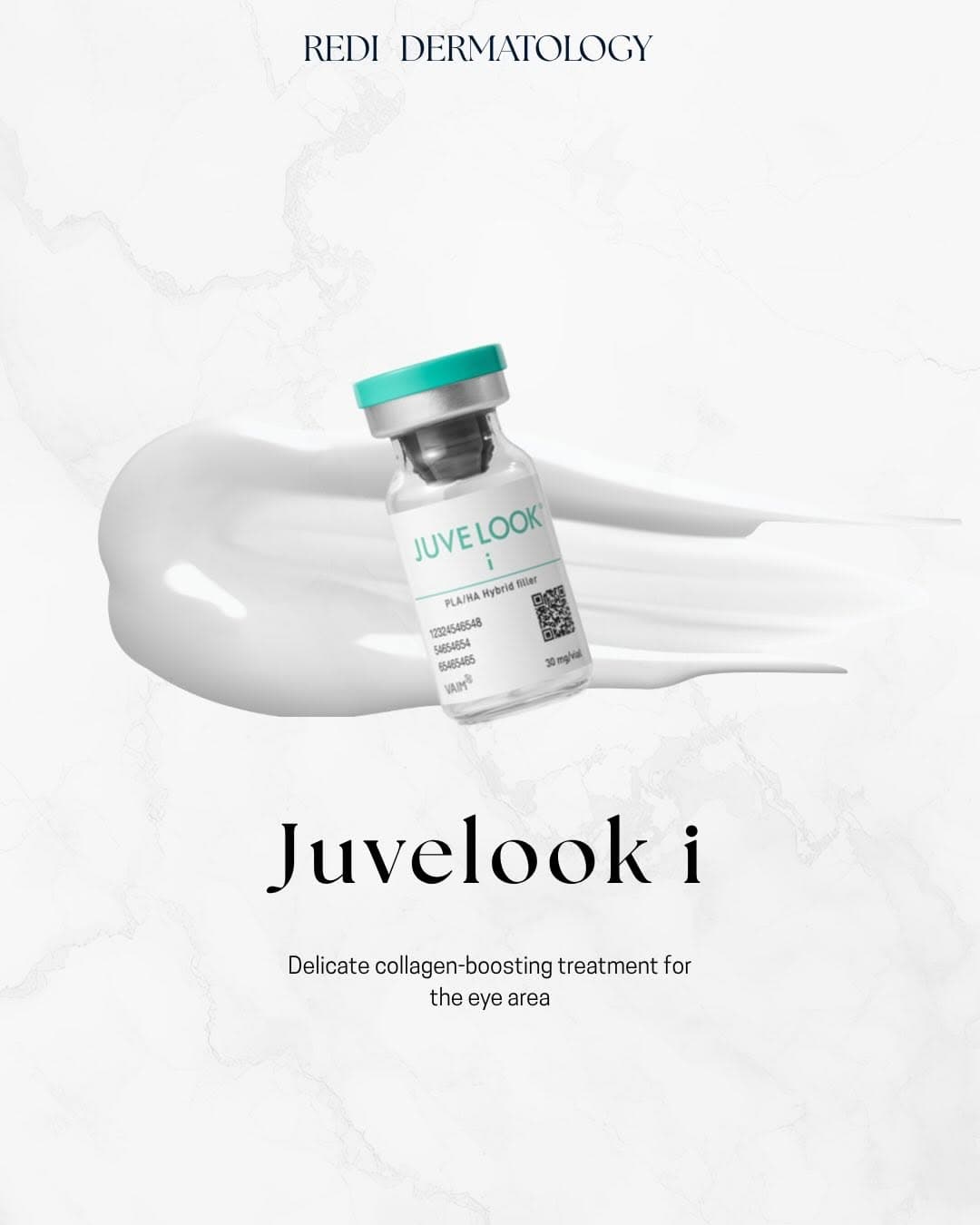
Juvelook Skin Booster
Juvelook is a PDLLA (poly-D,L-lactide) collagen booster that stimulates your skin's own collagen production to improve pores, firmness, fine lines, scars, and overall tone. Unlike a filler that simply adds volume, it helps the skin rebuild itself, so results develop naturally over time. At REDI, the blend and hydration protocol was refined by our Juvelook key doctor, and we match the delivery method — Dermashine Pro, Potenza, MIRAJET, Double Tite, and more — to your specific skin condition. With 15,000+ vials of hands-on experience, we know that the same product can deliver very different results depending on technique.
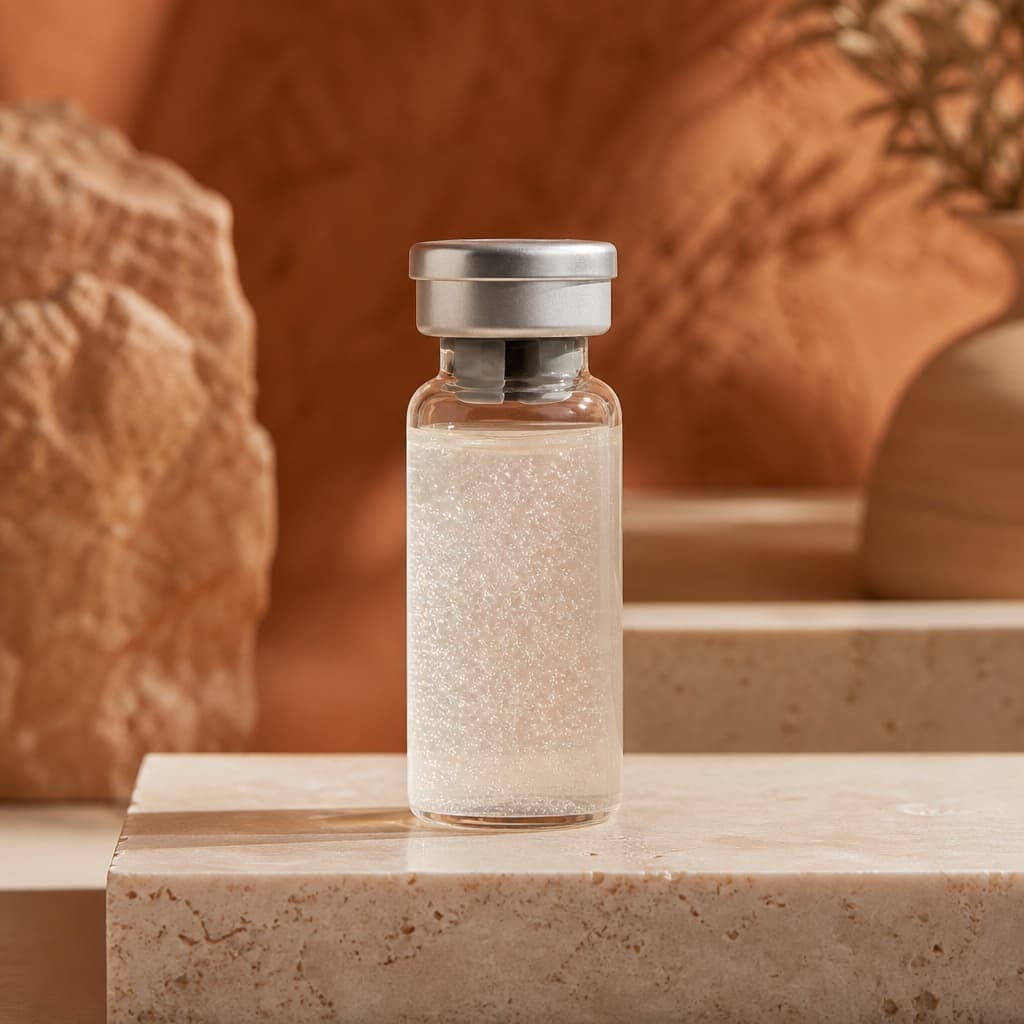
Exosome Skin Booster
A skin booster that delivers exosomes — messenger vesicles from stem-cell cultures — into the skin to support cell-to-cell signaling and the skin’s renewal environment. Used to manage texture, tone, and the skin barrier.
Visit REDI Dermatology
4F & 5F, DM Tower Bldg. 2, 105 Bangbae-ro, Seocho-gu, Seoul, Korea
길찾기 (Get directions)Medically reviewed by Dr. Min Jeong · Last updated September 19, 2026
This article is general information, not medical advice. Results vary by individual. These are elective, non-insured aesthetic treatments. Please consult a board-certified doctor about your own case.
Ask what your skin actually needs
Free online consultation