
Rejuran: What It Treats, Which Type Fits You, and When You Can Fly Home

Hello, I'm Dr. Min Jeong, founding director of REDI Dermatology in Seoul. Almost every week someone sits down in my consultation room and says a version of the same sentence: my skin looks tired and dry, the texture has gone rough, and a friend told me to get Rejuran while I'm in Korea. It's a reasonable instinct. It's also the point where expectations quietly go wrong, because Rejuran does something very specific — and not the thing many people are picturing. Please read to the end, especially the part about flying home.
What Rejuran actually is — and what it doesn't do
Rejuran is an injectable skin booster whose active material is polynucleotide derived from salmon. It is placed into the dermis to support the skin's own recovery environment, which is why we use it for texture, hydration and firmness rather than for shaping a face. Peer-reviewed review evidence attributes the collagen, elasticity and wrinkle-reduction effects of polydeoxyribonucleotide to activation of purinergic A2A receptors — that receptor pathway is the mechanism behind this whole category of injection.
Here is the honest limit. A filler adds volume immediately. A thread lifts. Rejuran does neither. It will not sculpt a cheek and it will not replace lost volume. What it works on is the quality of the skin itself — the fine crepiness, the roughness you feel under your fingertips, the dehydration that sits under a well-moisturised surface. Results vary by individual. If you want to see how it sits against a collagen stimulator, I compared them in Rejuran vs Juvelook.
Rejuran Healer vs HB Plus — and the S, i and HB questions
The product line is sold in several formulations, and readers arrive having read about Rejuran S, Rejuran i and Rejuran HB. I'll only speak for what we use. At REDI, the two we work with are Rejuran Healer and Rejuran HB Plus.
| Rejuran Healer | Rejuran HB Plus | |
|---|---|---|
| Main role | Renewing damaged skin, texture, resilience | Same base role, with a hydration-and-glow emphasis |
| Comfort | Numbing cream or cooling as needed | Contains lidocaine, so the session itself is easier |
| Typical session | About 20 minutes | About 20 minutes |
| Downtime | Minimal, generally 1–2 days | Minimal, generally 1–2 days |
If your priority is a lit-from-within look rather than pure repair, HB Plus is usually the more satisfying choice. If your skin is reactive and flushes easily, we may approach Rejuran for redness-prone skin more conservatively. Which one fits you is a consultation decision, not a menu decision.
Three reasons a Rejuran treatment disappoints
I've written about this in Korean for years, and my answer hasn't changed.
One: the depth was wrong. Rejuran belongs in the dermis. Injected too superficially or too deep, it does less. When an injector device is used to reduce discomfort, the settings matter just as much — a poor setting means more of the material leaks around the entry point instead of staying where it was meant to go. Same product, different result.
Two: the change is gradual, so people miss it. Improvement tends to build from around a month onward and accumulates quietly. There is no dramatic before-and-after moment, which is precisely why I ask patients to take a plain photo in daylight before we start. Results vary by individual.
Three: nobody explained what to expect. If you were promised glow and got smoother texture, you'll feel let down even though the treatment worked. That's a communication failure, and it's on the clinic.
This is the part I insist on at REDI. We are an individual clinic, not a high-volume chain, and a board-certified dermatologist — among the top 2% of Korean physicians — reads your skin in person before anything is recommended.
How many sessions, and when you'll notice
A fixed session count isn't published for Rejuran at our clinic, and I won't invent one. It depends on how compromised your skin barrier is, what else we're doing, and how many days you have in Seoul. What I can tell you is that Rejuran is a course treatment rather than a single event, and that we confirm your plan — and its cost — in a one-to-one consultation, clearly, before anything is done. There are no hidden fees.
Downtime, and when you can actually fly home
This is the question nobody online seems to answer plainly, so here it is as a calendar.
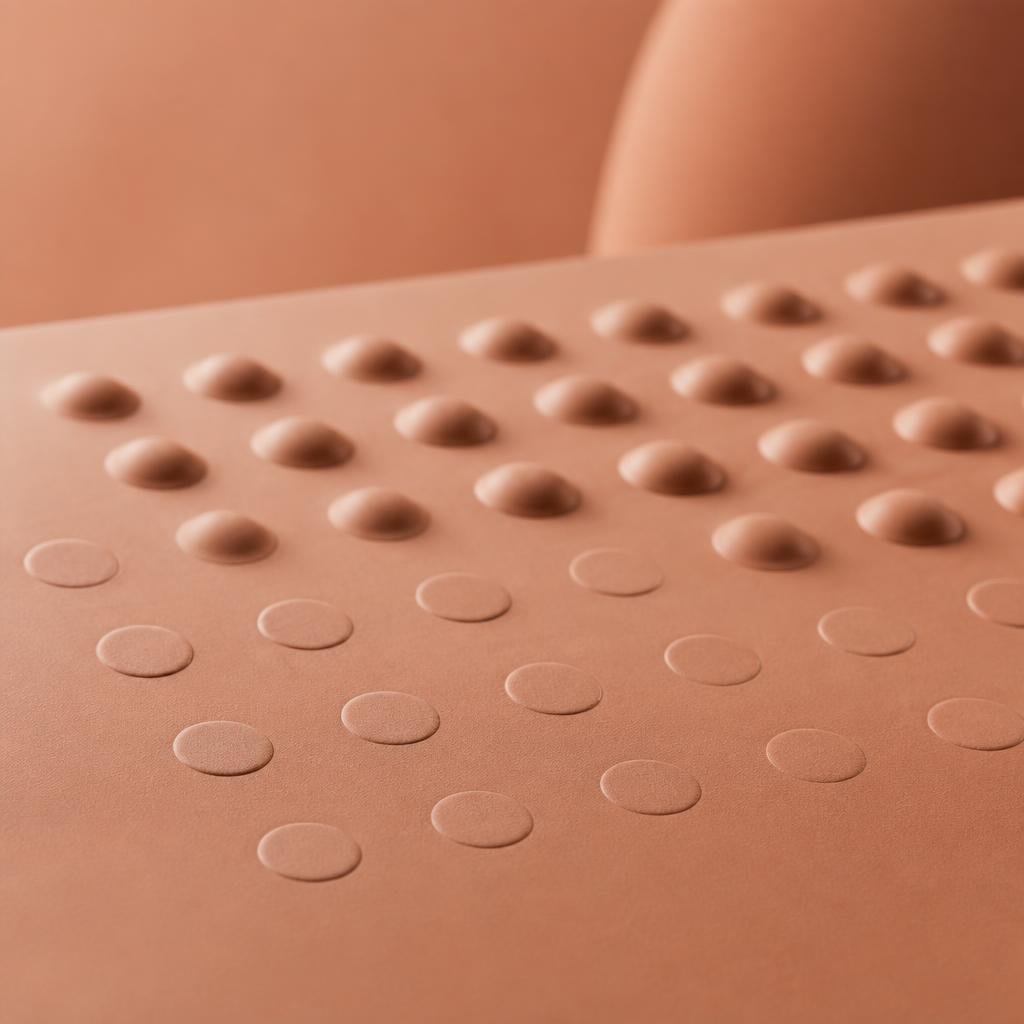
- Day 0: small injection bumps across the treated area, mild redness, occasional pinpoint bruising. Expected, not a complication.
- Day 1–2: bumps flatten. Downtime for Rejuran is minimal, generally 1–2 days.
- Day 3 onward: most people look ordinary again. Any bruise is usually coverable.
Cabin pressure is not the issue. The real question is whether you mind bumps being visible on a six-hour flight out of Incheon, and whether you'd rather be somewhere you can call us if something looks unusual. My preference is that patients keep at least one clear day in Korea after an injection appointment. More on scheduling in Flying After Skin Treatment and Skin Booster Aftercare in Korea.
Dry, sensitive and barrier-impaired skin
If you're searching for the best PDRN in Korea for dry skin, you're probably not chasing wrinkles — you're chasing comfort. Polynucleotide injections work on the skin's recovery environment rather than simply depositing water, which is why I often prefer them for people whose skin feels tight and rough despite heavy moisturiser. Results vary by individual.
Two cautions. If you have an active eczema or rosacea flare, I'd rather calm the skin first and inject afterwards; treating inflamed skin is not a shortcut. And if signalling and overall tone are the bigger issue, an Exosome Skin Booster may be the better first move, alone or combined.
Fitting Rejuran into one trip to Korea
If you're packing lasers, radiofrequency and injections into a few days, sequencing matters more than volume. In general I place energy-based work and injectable boosters on separate days where skin is reactive, rather than stacking everything into one afternoon, and the order depends on which concern is leading. That plan is built at consultation, with your flight dates on the table — the same logic I walk through in How Many Days in Korea for Skin Treatment.
Practically: Chinese- and English-speaking interpreters are on site for consultation and treatment, so you understand every option before you agree to it, and we follow up online once you're home. This is elective, non-insured aesthetic care, and it should feel like a considered decision rather than a purchase.
Takeaways
- Rejuran is a polynucleotide skin booster for texture, hydration and resilience — not a filler, not a lift.
- Healer and HB Plus are what we use; HB Plus contains lidocaine and leans toward glow and comfort.
- Depth and technique decide the outcome as much as the vial does.
- Downtime is minimal, generally 1–2 days; keep a clear day in Korea before flying.
- Sessions, sequencing and cost are confirmed in your consultation, in your language. Results vary by individual.
Frequently asked
What is Rejuran and what does it do?
Rejuran is an injectable skin booster based on polynucleotides derived from salmon. It is placed into the dermis to support the skin's own recovery environment, which is why it is used for texture, hydration and firmness rather than for adding volume. Peer-reviewed review evidence attributes the collagen, elasticity and wrinkle effects of polydeoxyribonucleotide to activation of purinergic A2A receptors. Results vary by individual.
What is the difference between Rejuran Healer, HB, S and i?
The Rejuran line is sold in several formulations aimed at different concerns. At REDI Dermatology we work with Rejuran Healer and Rejuran HB Plus. They differ in composition and intended use, and HB Plus contains lidocaine for a more comfortable session. Which one suits you depends on whether texture, hydration or firmness is your priority, and we decide that together at consultation.
How many Rejuran sessions do you need?
A session number is not published for this treatment, because it depends on your skin condition, your goals and how much time you have in Korea. Your plan is confirmed in a one-to-one consultation before anything is done. Results vary by individual.
What is the downtime after Rejuran?
Downtime is minimal, generally 1–2 days. Small injection bumps, mild redness and occasional bruising are the usual findings. Makeup timing and aftercare are explained at your appointment.
Is Rejuran FDA approved?
Regulatory status differs from country to country, and a product available in Korea is not automatically cleared or sold where you live. I do not state other countries' approval status on this page. Ask a licensed doctor in your own country what is available to you there, particularly if you will need follow-up at home.
Keep reading
More on this from Dr. Min Jeong.




Dr. Min Jeong
Founding director, REDI Dermatology · Seoul
“A treatment isn't shopping. I'd rather diagnose first and recommend only what your skin genuinely needs — the same way I'd advise my own family.”
Board-certified dermatologist — trained at Kangbuk Samsung Hospital, and former Chief of Dermatology at the ROK Ministry of National Defense.
Juvelook Key Opinion Leader — 15,000+ vials administered, Korea's highest-volume clinic (Apr 2025). Key Opinion Leader titles are granted by device companies and carry no legal standing.
A regular speaker on clinical dermatology at Korean medical symposiums, including Juvelook clinical-experience panels.
Why international patients choose REDI
Interpreters in the room
English and Chinese, on site for your consultation and treatment.
Board-certified doctors only
Every procedure by a dermatology specialist — never unsupervised staff.
15,000+ Juvelook vials — No.1 in Korea
Hands-on volume most clinics have not reached.
Airport pickup arranged
So your first day in Seoul isn't spent lost with luggage.
Aftercare once you're home
Online follow-up, so a question next week still reaches your doctor.
Explore the treatment
Rejuran Healer & Rejuran HB Plus
Rejuran Healer, a tissue-regenerating substance derived from salmon, is injected to effectively renew damaged skin. If you're sensitive to pain, Rejuran HB Plus — which contains lidocaine — offers a more comfortable treatment.
Rejuran
Rejuran Healer, a tissue-regenerating substance derived from salmon, is injected to effectively renew damaged skin. If you're sensitive to pain, Rejuran HB Plus — which contains lidocaine — offers a more comfortable treatment.
Visit REDI Dermatology
4F & 5F, DM Tower Bldg. 2, 105 Bangbae-ro, Seocho-gu, Seoul, Korea
길찾기 (Get directions)Medically reviewed by Dr. Min Jeong · Last updated September 19, 2026
This article is general information, not medical advice. Results vary by individual. These are elective, non-insured aesthetic treatments. Please consult a board-certified doctor about your own case.
Ask what your skin actually needs
Free online consultation