
Five checks on a Seoul clinic before you book the best korean acne scar treatment
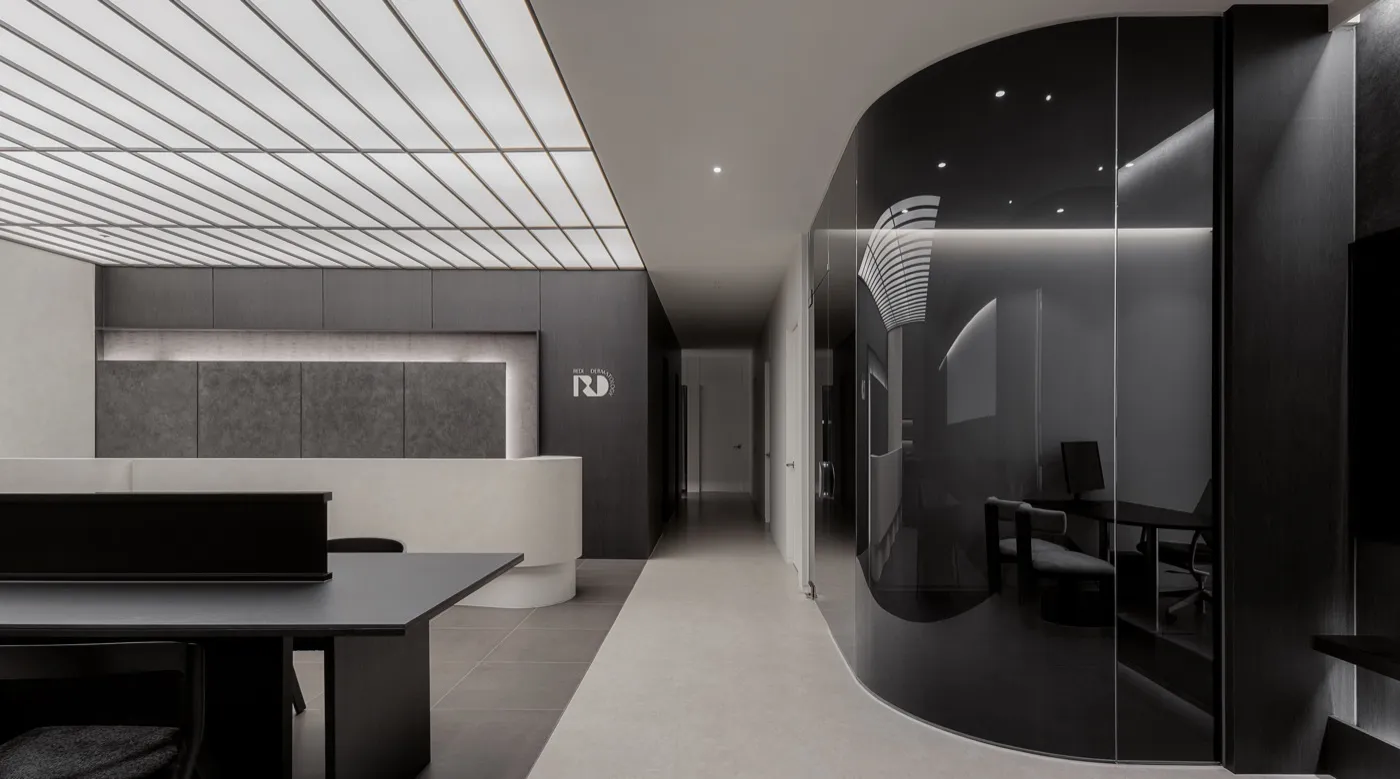
There isn't one best korean acne scar treatment; the treatment that helps is the one matched to the scar types on your face, and it usually involves more than one method. At REDI Dermatology in Seoul, pores and scars are treated by combining ablative and non-ablative lasers, chosen after diagnosis, instead of applying one-size-fits-all ablative resurfacing. Flying in, the worry that often weighs more than the laser itself is what happens after the flight home: who you ask when redness lingers after you're home.
I'm Dr. Min Jeong, founding director of REDI and a board-certified dermatologist. Please read to the end, because the last two sections are the ones you'll need after the trip.
If you're holding a treatment plan from a clinic at home, or you've been told your scars have improved as far as they will, this letter is for you.
Before going further, you can send two things on WhatsApp: a daylight photo of the scarred area from the front and one from the side, plus the dates you could be in Seoul.
What a plan from home usually says, and what it leaves out
Most plans that come out of a search for the best korean acne scar treatment name a device and a number of sessions. Fewer name the scar types on your face or say which method is meant for which type, and that missing line is usually why two clinics give different answers.
The American Academy of Dermatology describes acne scar treatment as depending on the kind of scar, and notes that dermatologists often combine more than one treatment. A plan that says only "fractional laser, five sessions" may still be reasonable. It just leaves you unable to judge it.
When you read the plan you already have, look for three things:
- Whether it separates indented scars from flat red or brown marks. They respond to different energy and are often treated on different schedules.
- Whether it mentions active acne. Treating scars over skin that is still breaking out tends to produce new marks over the area you just treated.
- Whether it explains what changes between sessions, or repeats the same setting each time.
None of this means the other doctor was wrong. A second look is mostly about naming what's there.
Which scar types are on your face?
Most faces with long-standing acne scars show two or three types at once, and the mix decides the best korean acne scar treatment for you more than any single device does. Here's how they usually look, and which options on REDI's pores and scars menu are often considered for each.
| Scar type | What you usually see | Options often considered |
|---|---|---|
| Ice pick | Narrow, deep pits that look like large pores | CROSS |
| Rolling | Soft waves that cast shadows under overhead light | Subcision, Juvelook Skin Booster |
| Boxcar | Round or oval dips with sharper edges | Potenza, Fractional Picosecond Laser, Double Tite |
| Flat red marks | Pink or red spots that fade when pressed | Vbeam Perfecta |
The flat marks aren't scars in the indented sense; they're leftover inflammation or pigment, and they often fade further with the right laser and sun protection. Indented scars are a change in the tissue under the surface, which is why skincare alone rarely lifts them. If you want the deeper reasoning on indented scars, the piece on why atrophic scars need depth goes through it layer by layer.
How a dermatologist reads scars before choosing
By light, touch and colour. Stretching the skin gently between two fingers helps too: rolling scars tend to soften when stretched, while ice pick and boxcar scars mostly stay put.
Colour is the next question. Pressing on a red mark and watching whether it blanches separates vascular redness from brown pigment, and that single test changes which laser makes sense. A history of dark marks after pimples or bug bites matters as well, because it suggests the skin may react to heat with extra pigment.
Age changes the picture. As the face loses some volume and firmness with time, rolling scars can look deeper than they did at thirty, even though the scar itself hasn't changed. In that situation a collagen-stimulating injectable such as Juvelook can be considered alongside resurfacing when you're weighing the best korean acne scar treatment for your face, since REDI's menu lists it for scars as well as firmness.
The last check is whether acne is still active. REDI's acne page puts it plainly: acne marks clear up most completely when treated early, alongside the acne itself. For breakouts that keep returning to the same spot, a treatment like Agnes, which uses single-pin radiofrequency on problem sebaceous glands, may come before any scar work. The broader plan for that stage is in our Korean acne treatment guide.
Doctor's note
When scars and active breakouts sit side by side, I'd rather calm the acne first than rush the scars, because new inflammation can undo part of the scar work. It's the less exciting answer, and some people arrive hoping to hear the opposite. I understand that; you've usually waited years to deal with these scars, and a slower first step can feel like a delay.
What should you check about a Korean clinic before booking?
Five things, and you can ask every one of them before you buy a ticket. They work for any clinic, including mine.
- Who examines you. Ask whether the doctor choosing your treatment is a board-certified dermatologist. My own training is listed on the clinic site: Board-Certified Dermatologist, Kangbuk Samsung Hospital, and full member of the Korean Dermatological Association, the Korean Society of Dermatology and the Korean Society for Clinical Dermatologic Treatment.
- When the plan is set. A plan fixed entirely in chat, before anyone has looked at your skin in person, is a plan made from photos. Photos help to start a conversation; the in-person exam is where depth and texture are actually read.
- Whether the plan is written per scar type. Ask to see which method is aimed at which area, using the table above as a guide.
- Who translates in the treatment room. At REDI, Chinese- and English-speaking interpreters are on site for consultation and treatment, so explanations don't stop at the reception desk.
- What the titles on the website mean. I'm listed as a Juvelook Key Opinion Leader and a POTENZA Expert Key Opinion Leader. Those titles are granted by the device companies and have no legal standing; they tell you a doctor works closely with a device, not how your skin will respond.
The U.S. Centers for Disease Control and Prevention suggests, for anyone travelling for medical care, checking the credentials of the people treating you and planning follow-up care at home before you leave. That advice fits scar treatment well, because the results develop slowly and mostly after you're back.
Risks and who should wait
The usual effects are temporary: redness, swelling, and pinpoint marks or light crusting after microneedle and fractional treatments. Less often, the skin darkens in patches.
DermNet describes this post-inflammatory hyperpigmentation as more common in darker skin types, and it usually fades over months, though it can take longer. Infection and new scarring are rare, and they're the reason aftercare instructions matter.
The realistic aim is scars that are less noticeable, not gone. The American Academy of Dermatology frames scar treatment the same way, and many people need several sessions spread over time. Results vary by individual.
Candidacy, and the choice of methods, is decided at the in-person exam.
If dark patches after breakouts or slow-fading redness are part of your history, mention it in your WhatsApp message along with your photos and a list of any acne medicines you've taken in the past year. That history is part of what the consultation weighs when energy levels, spacing between sessions and the order of treatments are discussed.
Planning a Seoul trip around scar work
Think of the first trip as the first session plus a written plan. Resurfacing and microneedle treatments are commonly repeated at intervals of several weeks, so one trip rarely covers the whole course, and it helps to decide early whether you'll return to Seoul or continue with a dermatologist at home.
Three practical points shape the itinerary:
- Flights. Redness and pinpoint marks may still be visible on the plane. Leave a buffer between the treatment and your departure, and ask at the consultation how long that buffer should be for the specific method chosen.
- Hours. REDI is at 4F & 5F, DM Tower Bldg. 2, 105 Bangbae-ro, Seocho-gu. It's open Mon/Wed/Fri 10:00 to 20:00, Tue/Thu 10:00 to 19:00 and Sat 10:00 to 15:00, with lunch from 13:00 to 14:00 on weekdays. The later weekday evenings can matter if you land in the afternoon.
- Language. The on-site interpreters cover Chinese and English, in the consultation and during treatment.
2 in Seoul](lib:redi-skin-global:9092d427 "REDI Dermatology, Bangbae-ro, Seocho-gu, Seoul")
For broader questions about how treatment abroad is regulated and what to look out for, see is Korean skin treatment safe. If you'd like a wider overview of methods before choosing, the acne scar treatment in Korea guide covers each one in more detail.
What to take home after the visit
A short record you can hand to a dermatologist at home. Ask for the names of the treatments done, the devices used, the date and the areas treated, and keep the aftercare instructions with it. If a question comes up later, a local doctor can read that record in minutes instead of guessing.
Take your own photos too, in the same daylight and from the same angles as the ones you sent before the trip. Scar changes are slow, and comparing like with like is the only way you'll see them clearly. REDI's consultation channels are WhatsApp and LINE; before you leave, ask how questions after you fly home are handled, and keep your local dermatologist informed either way.
Had scar treatment elsewhere? Send a photo of that clinic's record on WhatsApp, next to your scar photos.
Frequently asked
Can Korean skincare products fix acne scars?
Skincare can help flat red or brown marks fade and keep the surface smoother, especially with daily sun protection. Indented scars are a change in the tissue under the surface, so products alone rarely lift them. Those usually need procedures such as subcision, CROSS or fractional and microneedle treatments.
Should I treat my acne scars while I still have breakouts?
Usually the acne is calmed first, or at the same time as the marks, because new inflammation can leave fresh marks over treated skin. REDI's acne page notes that acne marks clear up most completely when treated early, alongside the acne itself. Deeper scar work generally follows once breakouts are under control.
Is one trip to Seoul enough for acne scar treatment?
For indented scars, rarely. Most methods are repeated over several sessions spaced weeks apart, so the first trip is often one session plus a plan. You can then decide whether to return or continue with a dermatologist at home.
Is acne scar treatment suitable for darker skin?
It can be, but darker skin types are more prone to patches of darkening after heat or injury. Tell the doctor about any dark marks you've had after pimples or scratches, since that history affects which methods and settings are chosen. The in-person exam decides suitability.
Will an interpreter be with me during the treatment itself?
At REDI, Chinese- and English-speaking interpreters are on site for both the consultation and the treatment. That means explanations about aftercare and what you'll feel continue in the treatment room, not only at the front desk.

Dr. Min Jeong
Founding director, REDI Dermatology · Seoul
“A treatment isn't shopping. I'd rather diagnose first and recommend only what your skin genuinely needs — the same way I'd advise my own family.”
Board-certified dermatologist — trained at Kangbuk Samsung Hospital, and former Chief of Dermatology at the ROK Ministry of National Defense.
Juvelook Key Opinion Leader — 15,000+ vials administered, Korea's highest-volume clinic (Apr 2025). Key Opinion Leader titles are granted by device companies and carry no legal standing.
A regular speaker on clinical dermatology at Korean medical symposiums, including Juvelook clinical-experience panels.
Why international patients choose REDI
Interpreters in the room
English and Chinese, on site for your consultation and treatment.
Board-certified doctors only
Every procedure by a dermatology specialist — never unsupervised staff.
15,000+ Juvelook vials — No.1 in Korea
Hands-on volume most clinics have not reached.
Airport pickup arranged
So your first day in Seoul isn't spent lost with luggage.
Aftercare once you're home
Online follow-up, so a question next week still reaches your doctor.
Visit REDI Dermatology
4F & 5F, DM Tower Bldg. 2, 105 Bangbae-ro, Seocho-gu, Seoul, Korea
길찾기 (Get directions)Medically reviewed by Dr. Min Jeong, Founding Director / Board-Certified Dermatologist · Last updated
Edited by: Dr. Min Jeong
This article is general information, not medical advice. Results vary by individual. These are elective, non-insured aesthetic treatments. Please consult a board-certified doctor about your own case.
Ask what your skin actually needs
Free online consultation