
Tune Face Korea: The Lift for Faces That Aren't Too Full or Too Thin

Hello, I'm Dr. Min Jeong. I founded REDI Dermatology in Seoul, and I'm a board-certified dermatologist. My residency and board certification were at Kangbuk Samsung Hospital, and radiofrequency lifting is a large part of my daily practice. Patients planning Tune Face Korea visits usually ask me something like: "My face isn't really saggy and it isn't really full. Which lift is for people like me?" Please read to the end, because that "in-between" face is exactly where Tune Face earns its place, and also where it can go wrong if it is set carelessly.
The short answer: Tune Face is a radiofrequency lift whose depth can be adjusted. That lets me trim a slightly heavy area while firming thinner skin in the same session, with a warm, comfortable sensation and little to no downtime. It is not a filler, it won't restore real hollows, and it isn't my first choice for redness.
| At a glance | |
|---|---|
| What it is | Depth-adjustable radiofrequency lifting |
| Time per session | About 30 minutes |
| Downtime | Little to none |
| Typical course | Three sessions about a month apart, then yearly |
| What it won't do | Fill hollows, treat redness, or fix scar-type pores |
Why most faces fall between two kinds of lift
I explain lifting in two groups. Some lifts slim as they tighten, because they reduce a little fat along the way. They suit fuller faces. Others firm the skin without touching fat, and suit faces with nothing to spare. The trouble is that most people aren't cleanly in either group.
A very common picture: the lower cheeks have started to hang, the nasolabial area looks heavier, yet the side of the face is already a little hollow. A fat-reducing lift could sharpen the jaw but deepen the hollow. A pure firming lift leaves the heaviness where it is. For faces like that, a Tune Face Korea consultation is usually where I start.

How Tune Face works: depth you can choose
Tune Face runs on the Accent Prime platform and uses a unipolar radiofrequency at 40.68 MHz. That frequency heats tissue mainly by making water molecules rotate, which is what allows the depth of heating to be steered rather than fixed.
In practice I work with two tips. A deeper tip reaches down to around 5, 8 or 11 mm and is used to refine the contour. A shallower tip works at around 1 to 3 mm, in the dermis, to build firmness. One thing people misunderstand: "reaching 11 mm" doesn't mean the strongest energy sits at 11 mm. Radiofrequency weakens with depth, and the same energy spread over more depth is gentler at any one point. Planning depth, strength and order area by area is the real skill.
That is also why I call it a hands-on treatment. The manufacturer's manual leaves a lot open, so two clinics running the same device can deliver very different sessions. Poorly planned deep passes on a thin face can deepen hollows, and careless rhythm can cause a burn. Done carefully, the risk of hollowing is very low. I hold a TUNE FACE Key Opinion Leader designation; that is a title device companies grant to physicians with extensive experience using a device or who have lectured on it, and it carries no legal standing.
What Tune Face in Seoul can improve, beyond lifting
Because heat reaches the dermis evenly, I regularly see effects beyond contour:
- Firmness and fine lines, as collagen rebuilds over the following weeks
- Pores and texture, especially pores that have widened from lost firmness and oiliness
- Tone, and in some people melasma that has been slow to respond to laser toning alone
And some honest limits:
- Redness: in my experience it doesn't help much. Other RF approaches such as Potenza do more.
- Ice-pick acne scars: these can look like pores, but they need scar treatment. Heat won't lift them.
- Real hollows: firmer skin makes a hollow less noticeable, but only an injectable such as Juvelook Volume actually restores volume.
- A very full lower face wanting a strong contour change: a more fat-focused device will do more.
Tune Face Korea reviews: what patients say, and what they don't
The comments I hear most, a few months after a course, are small everyday ones: "My face doesn't look tired even after a late night," "Pillow marks fade faster," "My skin feels like it's holding together." Many say the session felt like a warm facial and that they didn't need numbing.
What reviews mention less often is the suction. The handpiece draws the skin gently while it heats, so some people get light bruising for a few days. It is easy to cover, but it's worth knowing before a wedding or a photo shoot. Results vary by individual.
Sessions, and fitting them around trips to Korea
One session can show effect, but because the energy is split across several layers each time, I usually suggest three sessions about a month apart, then once a year to maintain. That's straightforward if you live in Seoul. It's harder if you're flying in.
Here is how I usually adapt a Tune Face Korea plan for visitors:
- Short single trip: one session, with a clear idea of what one session can and can't do. Downtime is little to none, so it can go on day one of your stay.
- Repeat visitors: we space sessions across your trips, roughly a month or more apart.
- Longer stays: a few weeks in Seoul can allow two sessions before you leave.
Flying the next day is generally fine. If light bruising appears, it fades on its own over a few days. Interpreters for English and Mandarin are on site, and I see you from consultation through treatment. After you go home, we follow up online with photos in the same light. Tune Face is an elective, non-insured treatment, and the plan and cost are set out at consultation.
Tune Face or Density: how I choose
Both are radiofrequency, and both make skin firmer. The difference is control. Density heats broadly through the dermis and is my usual first thought for slim faces that need firmness and texture. Tune Face lets me change depth area by area, so it fits faces with mixed concerns. For the neck, I cover the options in my neck lifting in Korea guide, and for a wider comparison of devices see skin tightening in Korea. More on the device itself is on our Tune Face page.
Takeaways
- Tune Face is depth-adjustable radiofrequency, so one session can slim a heavier area and firm thinner skin together.
- It suits in-between faces with mixed concerns and also helps pores, texture and tone; it doesn't fill hollows or treat redness.
- A first course is usually three sessions about a month apart, so a Tune Face Korea plan is built around how often you can travel.
- Downtime is little to none, with possible light bruising from suction, and follow-up continues online after you fly home.
Related reading on this topic
- Density Skin Tightening Treatment Korea: What the RF Tip Does, Who It Suits, and How Long to Stay
- Elravie Korea: What Re2O Puts Back Into Your Skin, and Why the Delivery Method Matters
- Exosomes Korea: Why Seoul Dermatologists Don't Inject Them, and How They're Used Instead
- Korean Anti Aging, Layer by Layer: What a Seoul Dermatologist Actually Plans for Your Face
- Korean Dark Circle Treatment: Why the Type of Shadow Decides Everything
- Korean Dark Spot Treatment: Which Spots One Trip Can Clear, and Which Need a Course
- Korean Laser Treatment: A Dermatologist's Map of Which Laser Does What, and How Long Each Keeps You in Seoul
- Korean Wrinkle Treatment: Why Seoul Dermatologists Treat Lines in Layers, Not With One Injection
- LDM Seoul: When I Book This Ultrasound Facial on a Trip, and When I Don't
- Lifting Laser Korea: Most Korean Lifts Aren't Lasers, and Why That Changes How You Plan a Trip
- Pico Laser Seoul: Toning or Fraxel? Know Which One You're Booking Before You Fly
- Radiesse Korea: Why It Isn't a Filler, Where It Works, and What Happens After the First Month
- Rejuran Korea: Why Technique Matters More Than the Vial, and What to Ask a Clinic in Seoul
- Sofwave Korea: Why Seoul Took to This Lift for Thin Faces, and Who Should Skip It
More from the clinic
Frequently asked
What is Tune Face?
Tune Face is a radiofrequency lifting treatment performed on the Accent Prime platform. Its energy depth can be adjusted, so one session can slim a heavier area slightly while firming thinner skin elsewhere.
Does Tune Face hurt?
Most people describe it as a warm massage-like sensation, and many don't need numbing. We use numbing cream and cooling when needed and tune the intensity with you. Sensation varies by person.
How many Tune Face sessions do I need?
One session can show effect, but I usually suggest a first course of three sessions about a month apart, then maintenance once a year. For visitors, we adapt this to how often you come to Korea.
What do Tune Face Korea reviews usually mention?
Patients often mention firmer, tighter-feeling skin, a slightly cleaner jawline, and smoother texture or pores. Some notice light bruising from the suction for a few days. Results vary by individual.
Is there downtime after Tune Face?
Downtime is little to none. You can return to normal plans the same day, which suits international patients on short trips.
Keep reading
More on this from Dr. Min Jeong.


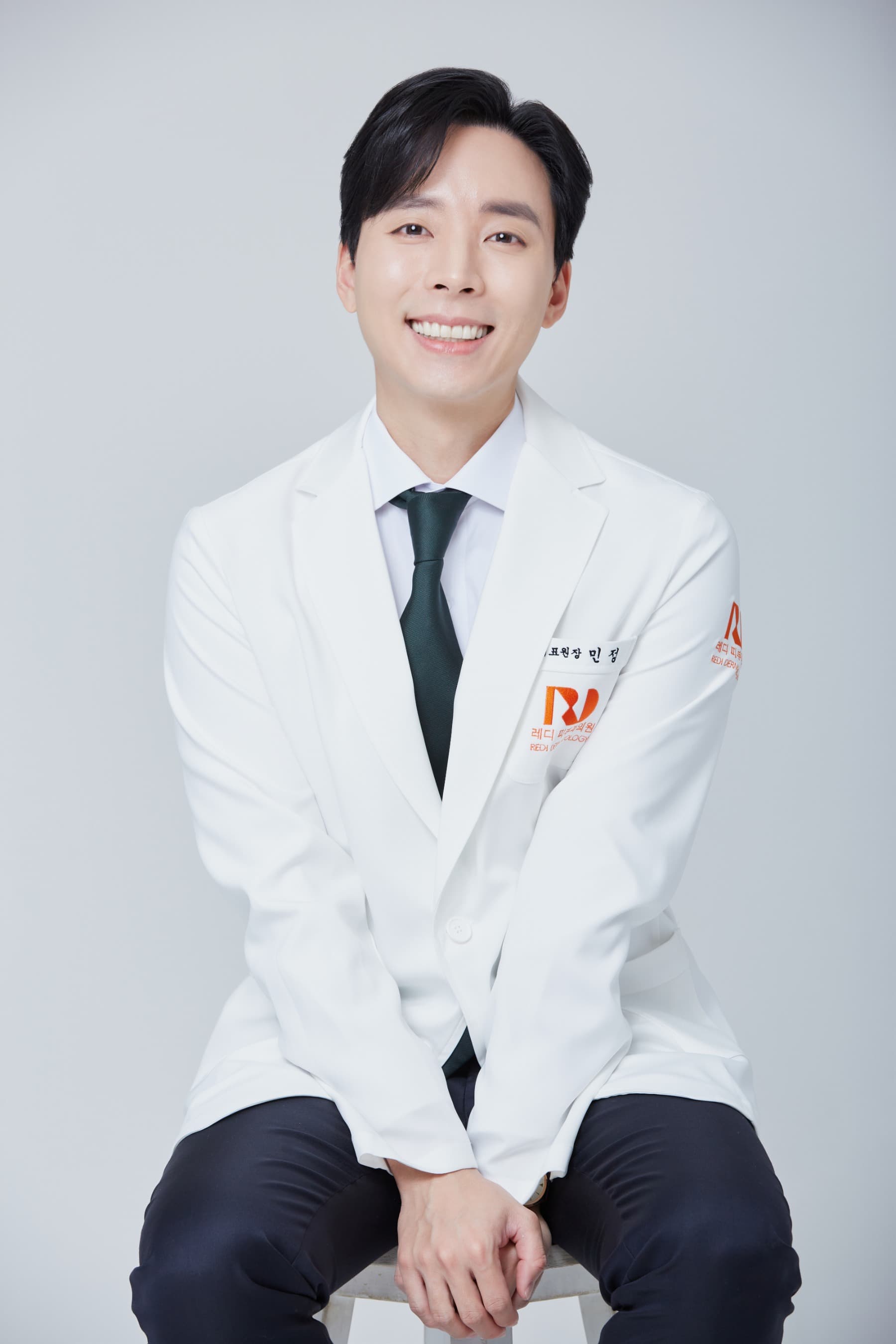
Dr. Min Jeong
Founding director, REDI Dermatology · Seoul
“A treatment isn't shopping. I'd rather diagnose first and recommend only what your skin genuinely needs — the same way I'd advise my own family.”
Board-certified dermatologist — trained at Kangbuk Samsung Hospital, and former Chief of Dermatology at the ROK Ministry of National Defense.
Juvelook Key Opinion Leader — 15,000+ vials administered, Korea's highest-volume clinic (Apr 2025). Key Opinion Leader titles are granted by device companies and carry no legal standing.
A regular speaker on clinical dermatology at Korean medical symposiums, including Juvelook clinical-experience panels.
Why international patients choose REDI
Interpreters in the room
English and Chinese, on site for your consultation and treatment.
Board-certified doctors only
Every procedure by a dermatology specialist — never unsupervised staff.
15,000+ Juvelook vials — No.1 in Korea
Hands-on volume most clinics have not reached.
Airport pickup arranged
So your first day in Seoul isn't spent lost with luggage.
Aftercare once you're home
Online follow-up, so a question next week still reaches your doctor.
Explore the treatment

Tune Face
With 40 million vibrations per second, Tune Face delivers precise energy exactly where it's needed — powerfully lifting a slackened facial line and reviving lost firmness through new collagen production.
Density
A breakthrough firming lift that pushes the technology one step further — maximum results with less discomfort. Alternating monopolar and bipolar radiofrequency delivers fast results, while the know-how of our Density key doctor ensures long-lasting satisfaction.
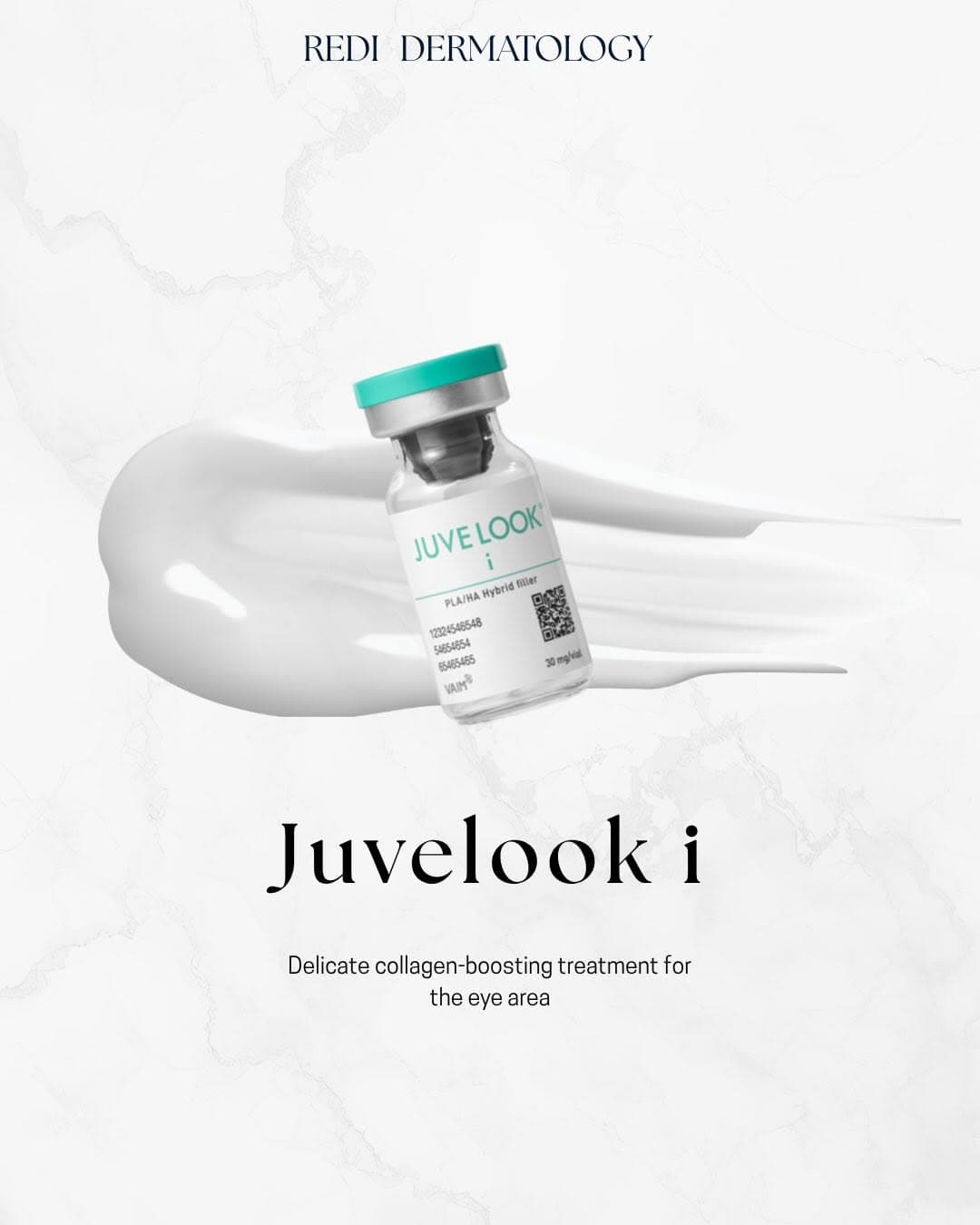
Juvelook Volume
A special blend and hydration know-how developed by our Juvelook key doctor. Its PDLLA component stimulates collagen production, creating the most natural volume — your own skin's volume — in areas like nasolabial folds, hollow cheeks, and sunken temples.
Visit REDI Dermatology
4F & 5F, DM Tower Bldg. 2, 105 Bangbae-ro, Seocho-gu, Seoul, Korea
길찾기 (Get directions)Medically reviewed by Dr. Min Jeong · Last updated
This article is general information, not medical advice. Results vary by individual. These are elective, non-insured aesthetic treatments. Please consult a board-certified doctor about your own case.
Ask what your skin actually needs
Free online consultation